
Does Your Salon’s Community Sponsorship Actually Bring In Clients?Salon Tóc Tài Trợ Cộng Đồng Nhưng Không Biết Có Mang Khách Về Hay Không

Your salon just wrapped its busiest sponsorship push of the year. You donated a haircut voucher to the organizers of the neighborhood 5K, set up a standee at the finish line, and posted a thank-you photo on your Facebook page. Two weeks later you check the booking calendar. It looks exactly like every other week. Full, but not fuller. And you have no idea whether that race brought you a single new client, or whether you just spent product, staff time, and goodwill on an event that changed nothing.
Table of Contents
- The Uncomfortable Truth
- Why Sponsorships and Bookings Never Talk to Each Other
- Key Takeaways
- A Practical Setup You Can Run Before Your Next Sponsorship
- Industry Scenario: Three Partners, One Quarter, One Clear Signal
- How Blue Black Ocean Approaches This Problem
- A Simple Measurement Plan
- Frequently Asked Questions
- Do I need special software to track which partnership brought in a client?
- What if a client heard about us from more than one source?
- Should I stop sponsoring community events until I have this system in place?
- How many partnerships should a salon realistically track at once?
- What to Do This Week
This is the quiet frustration behind almost every community partnership a hair salon takes on. You sponsor the gym’s open house, trade services with the flower shop down the street, donate a few blowouts to the elementary school fundraiser. It feels like the right thing to do, and it probably is good for your reputation in the neighborhood. But when it comes time to decide which partnerships to renew next year and which ones to quietly let go, you have nothing to go on except a vague sense of “that one felt good” or “that one felt like a lot of work for not much.”
The Uncomfortable Truth
The uncomfortable truth is that your community partnerships are not actually failing to bring in clients. They might be working quite well. You simply have no way to prove it, because your online booking system and your offline neighborhood relationships have never been connected. Every new client who mentions “the gym” or “the flower shop” gets folded into the same undifferentiated column as walk-ins, Google searches, and old regulars. There is no separation, so there is no decision-making ability.
This is not a marketing effort problem. It is a measurement design problem. Salons rarely fail at showing up in the community. They fail at building a thin layer of tracking on top of that presence before the event happens, not after.
Why Sponsorships and Bookings Never Talk to Each Other

The root cause is structural, not a lack of effort. Most salons treat community outreach and digital marketing as two completely separate departments of thought, even when the same one or two people run both. Nobody asks a new client “how did you hear about us” in a consistent, recorded way. There is no unique offer code tied to the gym versus the flower shop versus the school. There is no dedicated web page or pinned post that a partner’s audience actually lands on. Without any of that, every source of new business gets averaged into one overall revenue number that cannot be pulled apart later.
Once you see the mechanism this way, the fix is not “do more community work” or “stop sponsoring things.” The fix is adding a measurement layer to what you are already doing, so the same effort produces an answer instead of a guess.
Key Takeaways
- Community partnerships are a legitimate channel for hair salons, but only when they are built to be measurable from the start, not evaluated after the fact.
- The problem is not sponsorship itself, it is the absence of a tracking method that separates one partner’s referrals from another’s.
- A single required question at booking, “how did you hear about us,” turns invisible word of mouth into a countable signal.
- Unique offer codes and dedicated landing pages per partner let you compare apples to apples instead of guessing by gut feeling.
- Monthly review is what makes the data useful. Without a set date to compare codes used against dollars or product spent, the information just sits there unused.
A Practical Setup You Can Run Before Your Next Sponsorship
Before you agree to sponsor, co-market, or trade services with any local partner again, this is the checklist to run through first.
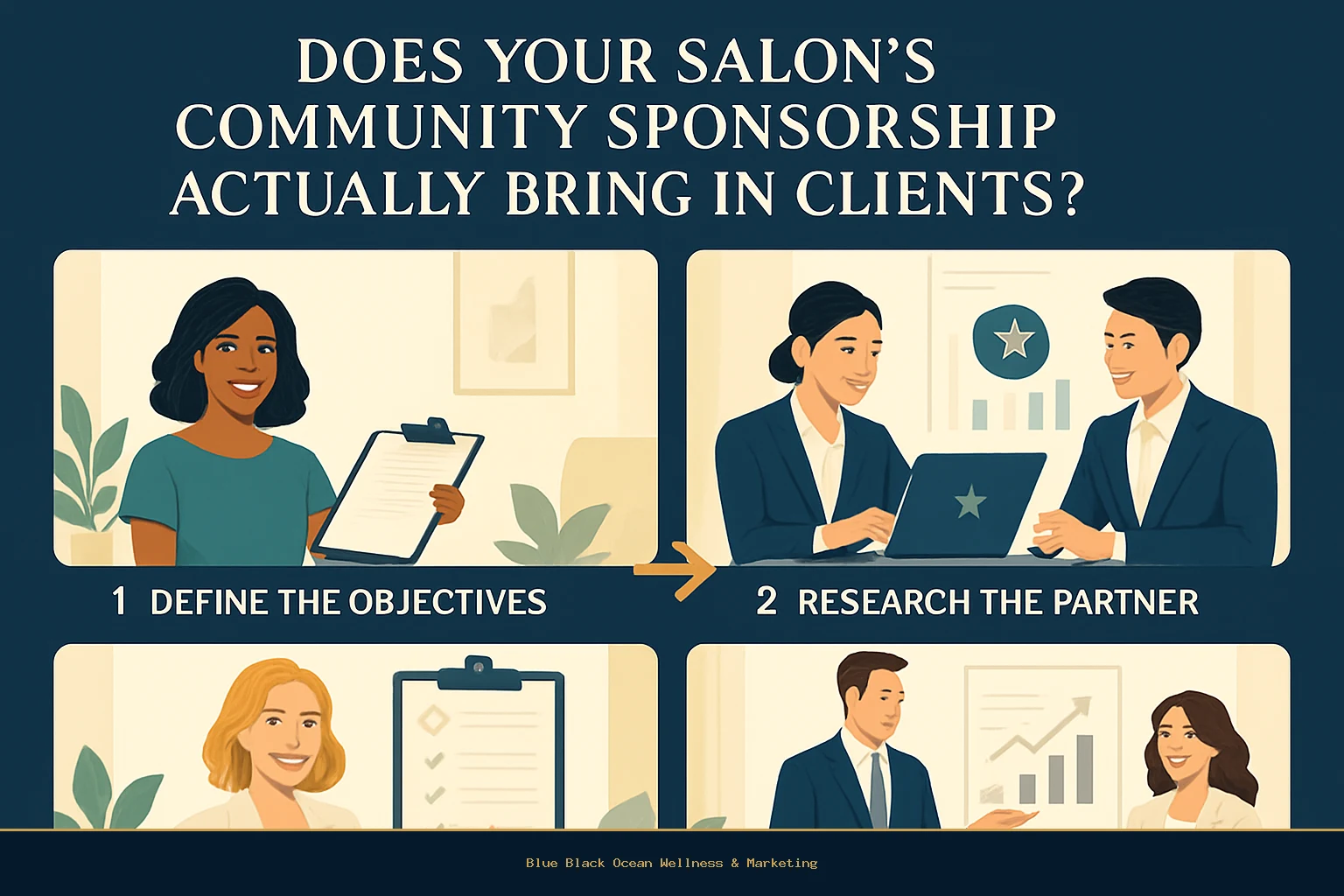
- Assign a unique offer name or code to each partner. “GYM15” for the fitness studio, “BLOOM10” for the flower shop, “PRESCHOOL5” for the school. Never reuse a generic code across partners.
- Add one required question to your booking form or front-desk script: “How did you hear about us?” Train your receptionist or booking software to log the answer every single time, not just when it seems relevant.
- Build a dedicated page or pinned post for each partnership. This can be a simple section on your website or a pinned Facebook post that partner’s followers land on when they click through. It should explain the offer clearly enough that someone unfamiliar with your salon understands why to call.
- Set a monthly review date, not an annual one. Sit down once a month and compare how many clients used each partner’s code against what you spent in vouchers, product, staff time, or standee printing for that partnership.
- Decide based on what the numbers show, not on how the event felt. A partnership that required almost no effort but produced steady bookings deserves more investment. A partnership that consumed a lot of time and produced little deserves a second look or a graceful pause.
Industry Scenario: Three Partners, One Quarter, One Clear Signal
Consider a composite, illustrative scenario, not an actual Blue Black Ocean client. A salon partners with three neighborhood organizations in the same quarter: a gym, a local flower shop, and a nearby preschool. Each partner gets its own offer code and its own link back to the salon’s website. At the end of the quarter, the owner reviews the numbers and notices something unexpected: the preschool’s code is used noticeably more often than the other two, even though the preschool partnership required the least time and effort to maintain. Based on that signal, the salon decides to deepen the relationship with the preschool and pause the lower-performing partnership rather than renewing all three automatically out of habit.
This is the kind of decision that is only possible once tracking exists. Without it, all three partnerships would have looked equally uncertain, and the salon would likely have renewed everything, or cut based on a guess, next year.
How Blue Black Ocean Approaches This Problem
Blue Black Ocean works with salons to diagnose exactly where the disconnect happens between community activity and booking data. That usually starts with a short audit of your current intake process: does anyone ask new clients where they heard about you, and is that answer ever recorded anywhere useful?
From there, Blue Black Ocean helps set up the practical pieces: a short video captured at the salon during a partnership event, a dedicated landing page or website section for each community relationship, and a consistent posting calendar that keeps reminding your audience and your partner’s audience that the relationship exists. The goal is always the same: make sure a potential client sees enough about your salon, through the partner’s channel, to feel confident calling or booking. Measurement only works if the visibility feeding it is solid in the first place.
A Simple Measurement Plan
- Baseline: Before your next partnership, note your average weekly bookings so you have something to compare against.
- Leading indicators: Number of times each partner’s unique code is mentioned or used, and how many new clients name that partner in the “how did you hear about us” question.
- Business outcome: Whether bookings tied to a specific partner justify the time, product, or discount invested in that relationship.
- Review cadence: Monthly, not annually, so you can adjust before an entire year of budget is spent on an unproven partnership.
Frequently Asked Questions
Do I need special software to track which partnership brought in a client?
No. A simple required question at booking, paired with a spreadsheet where you log the answer, is enough to start. Software helps later, but the habit of asking and recording matters more than the tool.
What if a client heard about us from more than one source?
Ask them to name the one that mattered most, or the first one they remember. Perfect precision is not the goal. A consistent, honest pattern over several months is what gives you a usable signal.
Should I stop sponsoring community events until I have this system in place?
Not necessarily. You can set up a unique code and the booking question within days for your very next partnership. There is no need to pause outreach, just add the missing measurement layer before the next event happens.
How many partnerships should a salon realistically track at once?
Start with whichever partnership is closest or most active right now. Trying to retrofit tracking onto five relationships at once usually leads to nobody doing it consistently. One well-tracked partnership beats five untracked ones.
What to Do This Week
Pick the community partner you are currently working with most closely, whether that is a gym, a florist, a school, or a local studio. Create one unique offer code with that partner’s name in it. Add the question “how did you hear about us” to your booking form or your front-desk script within the next seven days. That single change is what turns your next sponsorship from a guess into a number you can act on.
If you would like help setting up this measurement layer, building a dedicated page for your community partners, or reviewing which of your current relationships are actually earning their keep, Blue Black Ocean offers a Free Marketing Direction Review. There is no guarantee attached, just a clear-eyed look at where your community visibility and your booking data can finally start talking to each other.
Trả lời nhanh: Salon tóc mất khả năng đo lường hiệu quả hợp tác cộng đồng không phải vì các hoạt động đó vô ích, mà vì chưa có mã ưu đãi riêng, câu hỏi nguồn khách, hoặc trang riêng cho từng đối tác. Muốn biết tài trợ có mang khách về hay không, salon cần thiết kế cách nhận diện nguồn khách trước khi bắt đầu hợp tác, không phải sau khi sự kiện kết thúc.
Mục lục
Một chủ salon quen thuộc với tình huống này: tài trợ giải chạy khu phố, tặng voucher cắt tóc cho ban tổ chức, dựng standee ngay tại sự kiện, sau đó đăng vài tấm ảnh cảm ơn lên fanpage. Vài tuần trôi qua, lịch đặt chỗ vẫn kín như mọi tuần bình thường khác. Không ai trong salon biết chắc liệu sự kiện đó có mang thêm một khách mới nào hay không, hay tất cả chỉ là khách quen quay lại như thường lệ.
Đây không phải chuyện hiếm. Salon tóc thường có mối quan hệ tự nhiên với cộng đồng xung quanh: phòng gym cùng khu, studio yoga, tiệm hoa, trường mẫu giáo, thậm chí quán cà phê góc phố. Những mối quan hệ này dễ hình thành vì gần gũi, nhưng lại khó đánh giá vì không ai đặt câu hỏi đo lường ngay từ đầu.
Sự thật cần nhìn thẳng
Sự thật là phần lớn salon coi hoạt động cộng đồng và marketing online là hai thế giới tách biệt. Fanpage đăng bài về sự kiện, website vẫn y nguyên, hệ thống đặt lịch không hề hỏi khách biết đến salon từ đâu. Kết quả là mọi khách mới, dù đến từ tài trợ, từ mạng xã hội, hay từ khách đến trực tiếp không đặt lịch trước, đều bị gộp chung vào một cột doanh thu duy nhất.
Khi không tách bạch được nguồn khách, salon rơi vào vòng lặp quen thuộc: tiếp tục tài trợ vì cảm giác nên làm, không phải vì có bằng chứng nó hiệu quả. Ngân sách, sản phẩm tặng, và thời gian nhân sự bị đổ vào những mối quan hệ mà không ai dám khẳng định nên tiếp tục hay nên dừng.
Nguyên nhân gốc không nằm ở việc chọn sai đối tác. Nó nằm ở việc salon chưa từng thiết kế một lớp đo lường mỏng, đơn giản, để gắn lên trên các hoạt động offline. Không có mã riêng, không có câu hỏi nguồn khách, không có trang landing riêng, thì mọi nỗ lực cộng đồng đều trôi vào khoảng mờ giữa online và offline.
Những điểm chính cần ghi nhớ
- Hợp tác cộng đồng vẫn là kênh giá trị thật cho salon tóc, nhưng chỉ khi thiết kế được cách đo lường trước khi triển khai.
- Mỗi đối tác cần một mã ưu đãi hoặc tên gọi riêng để tách bạch nguồn khách, không dùng chung một mã cho tất cả.
- Câu hỏi “bạn biết đến salon qua đâu” nên là một bước bắt buộc khi đặt lịch hoặc check-in, không phải câu hỏi tuỳ hứng.
- Một trang riêng trên website hoặc bài đăng ghim trên fanpage cho từng đối tác giúp khách hiểu rõ mối quan hệ và ưu đãi liên quan.
- Đối chiếu định kỳ hàng tháng giữa số khách dùng mã và chi phí tài trợ giúp salon quyết định nên đầu tư sâu hơn vào ai, nên dừng ai.
Quy trình thiết lập đo lường cho từng hợp tác cộng đồng
- Trước khi ký bất kỳ hợp tác nào, tạo một mã ưu đãi hoặc tên gọi riêng mang tên đối tác đó, ví dụ mã dành riêng cho phòng gym, mã dành riêng cho trường mẫu giáo.
- Thêm câu hỏi nguồn khách vào biểu mẫu đặt lịch online và vào kịch bản của lễ tân khi khách gọi điện hoặc đến trực tiếp không đặt lịch trước.
- Tạo một trang riêng trên website hoặc một bài đăng ghim trên fanpage cho từng đối tác, nêu rõ ưu đãi, thời hạn áp dụng, và cách sử dụng mã.
- Đặt lịch đối chiếu hàng tháng: liệt kê số khách đã dùng mã của từng đối tác, so sánh với chi phí và công sức đã bỏ ra cho hợp tác đó.
- Sau mỗi quý, quyết định rõ ràng: tiếp tục, mở rộng, hoặc dừng hợp tác dựa trên dữ liệu thu thập được, không dựa trên cảm giác.
Ví dụ minh họa sau đây là một tình huống tổng hợp, không phải khách hàng thật. Một salon giả định hợp tác với ba đối tác cùng lúc trong một quý: phòng gym, cửa hàng hoa, và trường mẫu giáo gần đó. Mỗi nơi được gán một mã ưu đãi riêng và một đường link riêng dẫn về website. Sau một quý, salon nhận ra mã của trường mẫu giáo được dùng thường xuyên hơn hẳn hai nơi còn lại, dù đây là nơi salon bỏ ít công sức nhất. Từ dữ liệu đó, salon quyết định đầu tư sâu hơn vào mối quan hệ với trường mẫu giáo và tạm dừng tài trợ ở nơi ít hiệu quả hơn.
Trước đây, salon tóc muốn tiếp cận cộng đồng xung quanh thường phải dựa vào tờ rơi phát tại khu vực, standee tại sự kiện, hoặc quảng cáo trên báo địa phương. Những kênh đó khó đo lường gần như tuyệt đối. Mạng xã hội và website hiện nay cho phép salon gắn thêm một lớp theo dõi mỏng lên trên chính những hoạt động offline quen thuộc đó, biến một buổi tài trợ mơ hồ thành một kênh có dữ liệu thật để đánh giá. Điều này không có nghĩa là mạng xã hội luôn rẻ hơn hoặc luôn hiệu quả hơn tờ rơi hay bảng quảng cáo. Nó có nghĩa là công cụ đo lường đã dễ tiếp cận hơn, nhưng kết quả chỉ đến khi salon kết nối đúng chiến lược, nội dung, website, và quy trình theo dõi với nhau.
Câu hỏi thường gặp
Salon nhỏ có cần làm mã ưu đãi riêng cho từng đối tác không, hay dùng chung một mã cho tiện?
Dùng chung một mã sẽ khiến salon không bao giờ biết đối tác nào thực sự mang khách về. Ngay cả một salon một ghế cũng nên tách mã riêng cho từng mối quan hệ, vì đây là cách duy nhất để so sánh công bằng giữa các đối tác.
Nếu khách quên nói mã hoặc quên nhắc đến đối tác thì sao?
Đây là lý do câu hỏi “bạn biết đến salon qua đâu” cần được hỏi chủ động bởi lễ tân hoặc xuất hiện rõ ràng trong biểu mẫu đặt lịch, thay vì chờ khách tự nhắc. Một câu hỏi ngắn, hỏi đúng lúc, sẽ thu được dữ liệu đầy đủ hơn nhiều so với việc để khách tự khai báo.
Bao lâu thì nên đánh giá lại một mối quan hệ hợp tác cộng đồng?
Chu kỳ hàng tháng đủ để nhìn thấy xu hướng ban đầu, nhưng quyết định tiếp tục hay dừng nên dựa trên dữ liệu tích lũy trong ít nhất một quý, vì một số mối quan hệ cộng đồng cần thời gian để cộng đồng xung quanh ghi nhận và phản hồi.
Giải pháp Blue Black Ocean đề xuất

Điểm nghẽn phổ biến nhất mà Blue Black Ocean nhìn thấy ở các salon tóc là khoảng trống giữa hoạt động cộng đồng và dữ liệu đặt lịch. Salon có mối quan hệ tốt với hàng xóm, nhưng không có công cụ nào ghi nhận mối quan hệ đó bằng số liệu cụ thể.
Blue Black Ocean bắt đầu bằng việc chẩn đoán: xem lại toàn bộ các mối quan hệ cộng đồng salon đang có, kiểm tra xem đâu là nơi đang bị bỏ sót dữ liệu. Sau đó, Blue Black Ocean quay video ngắn ngay tại salon trong các buổi hợp tác hoặc sự kiện, giúp nội dung có hình ảnh thật thay vì chỉ là ảnh chụp vội. Nội dung này được đăng đều đặn trên fanpage theo lịch cố định, không phải đăng một lần rồi quên.
Song song đó, Blue Black Ocean xây dựng hoặc cải thiện website salon để mỗi đối tác cộng đồng có một mục riêng, một ưu đãi riêng, một đường link riêng dễ theo dõi. Mục tiêu là khi khách nhìn thấy salon qua một đối tác cụ thể, họ hiểu ngay đây là salon nào, ưu đãi gì, và cách đặt lịch trước khi họ gọi điện hoặc ghé qua.
Nếu salon của bạn đang tài trợ, hợp tác, hoặc xuất hiện tại nhiều sự kiện cộng đồng nhưng chưa từng biết chắc điều đó có mang khách về hay không, đây là thời điểm để nhìn lại cách đo lường. Blue Black Ocean mời bạn đăng ký một buổi Free Marketing Direction Review để cùng xem lại các mối quan hệ cộng đồng hiện có và tìm điểm nghẽn cụ thể, không có gì đảm bảo kết quả trước, chỉ có một buổi trao đổi thẳng thắn. Truy cập trang Contact để đặt lịch trao đổi.


[…] Does Your Salon’s Community Sponsorship Actually Bring In Clients? […]