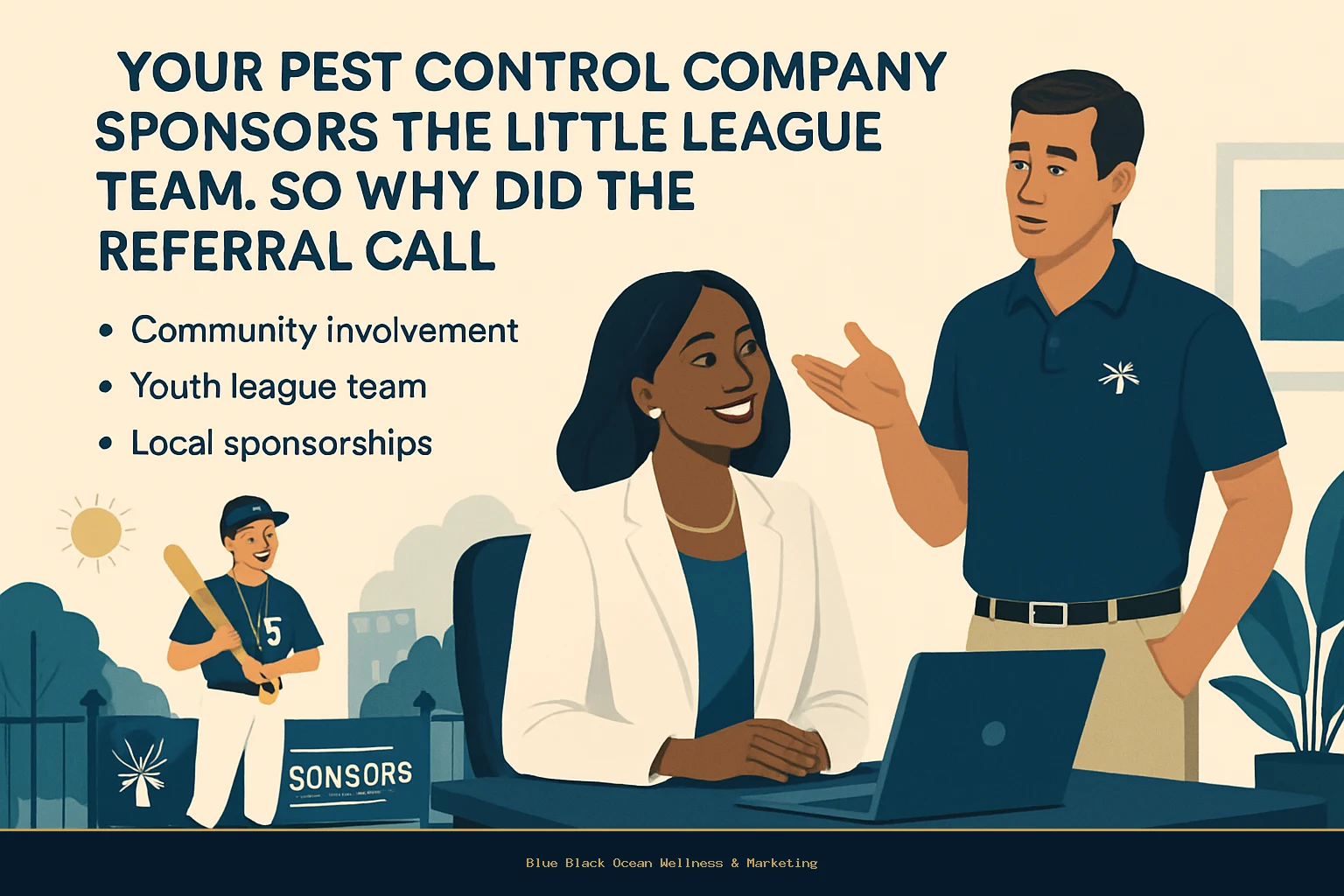
Your Pest Control Company Sponsors the Little League Team, So Why Did the Referral Call Your Competitor?Vì Sao Tài Trợ Cộng Đồng Không Giúp Công Ty Kiểm Soát Côn Trùng Có Thêm Cuộc Gọi

A new resident asks their neighbor for a pest control recommendation. The neighbor names your company. Then the new resident opens Google, searches to confirm the recommendation, and books with a competitor instead. If that sequence sounds familiar, the problem is not your reputation in the neighborhood. It is the missing bridge between the trust you have already earned offline and the decision someone makes on their phone thirty seconds later. This is the gap that quietly drains value out of every sponsorship, every HOA relationship, and every community event a pest control company pays for, season after season.
Table of Contents
- The Uncomfortable Truth
- Why the Offline Relationship Never Makes It Online
- Nobody documents the moment
- Nobody asks the partner for a mention
- Nobody asks the new customer how they heard
- The Point of View: One System, Not Two Budgets
- Illustrative Industry Scenario
- Key Takeaways
- A Practical Weekly Process to Close the Gap
- Step 1: Pick one upcoming local touchpoint
- Step 2: Assign one person to document it
- Step 3: Ask the partner for a short mention
- Step 4: Post it with context, not just a photo
- Step 5: Add the attribution question to every new customer call
- Step 6: Review the log after two weeks
- Step 7: Check what a new searcher would actually find
- How Blue Black Ocean Approaches This Problem
- Frequently Asked Questions
- Do we need to spend more on sponsorships to see a difference?
- What if our HOA or partner contact does not want to be filmed or quoted?
- How long before we see this reflected in actual calls?
- Isn't asking "how did you hear about us" just for tracking ad spend?
- Our website already lists our service area. Isn't that enough?
- What to Do This Week
This article is about that gap specifically: not general marketing advice, not “post more on social media,” but the exact mechanism by which local goodwill fails to convert, and the specific weekly habit that closes it.
The Uncomfortable Truth
Most pest control owners can list their community involvement without hesitation: the youth baseball team jersey sponsorship, the banner at the fall festival, the technician who waves at the HOA manager by first name in three different neighborhoods. What almost none of them can do is answer a simpler question: which of those relationships actually produced a phone call last month?
That is the uncomfortable truth. Community visibility and digital visibility are treated as two separate line items, one under “goodwill” and one under “marketing,” when they are actually one continuous system. A sponsorship that is never photographed, never posted, and never connected to a testimonial does not compound. It resets to zero the moment the event ends. Meanwhile, the new resident who heard your name from a neighbor still does exactly what everyone does before calling a service business: they check the website and the Google Business Profile to confirm the recommendation. If what they find there is thin, outdated, or vague about service areas and treatment approach, the neighbor’s endorsement gets overridden by whichever competitor’s search result answered the question first.
The company is not losing because it lacks community trust. It is losing because that trust never left the neighborhood. It never became visible to a stranger doing due diligence online, so it never had the chance to close the sale it had already half-earned.
Why the Offline Relationship Never Makes It Online
This gap persists for a specific, recurring reason: sponsorships and partnerships get treated as goodwill gestures instead of content and attribution opportunities. Three habits are usually missing at the same time, and any one of them alone is enough to break the chain.
Nobody documents the moment
A technician shows up at the community fall festival, sets up the banner, talks to a dozen families, and packs up. No one takes a photo. No one records ten seconds of video. The event happened, real conversations happened, and none of it exists anywhere a future customer could find it.
Nobody asks the partner for a mention
The HOA manager who has trusted this company for three years and recommends them informally to new homeowners has never been asked for a two-sentence quote or a shareable mention. That relationship is a marketing asset sitting completely idle.
Nobody asks the new customer how they heard
Without a simple attribution question at intake, ownership has no way to see that three new customers this month mentioned the HOA, or that a spike in calls followed the festival. The data that would prove the sponsorship’s value is never collected, so the value looks invisible even when it is real.
The Point of View: One System, Not Two Budgets
Treating community sponsorship and digital marketing as separate efforts is the root mistake. They should be planned, executed, and reviewed as one system with a single goal: make sure that when someone searches after hearing your name locally, what they find online confirms the recommendation instead of contradicting it.
This does not require a bigger sponsorship budget. It requires turning each local relationship you already have into two things: a piece of content, and a traceable path back to a call. The businesses that consistently win local trust are rarely spending more money on sponsorships than their competitors. They are simply the ones who document, share, and track what the sponsorship already earned them.
Illustrative Industry Scenario
The following is a composite, fictional scenario built to illustrate the mechanism described above. It does not represent a real client, company, or measured outcome.
Picture a locally owned pest control company, we will call it Greenline Pest Solutions for the sake of this example, that sponsors a neighborhood 5K and maintains an informal referral relationship with a property management company overseeing several apartment communities. For years, Greenline’s owner attended every 5K, shook hands with the property manager at renewal time, and assumed the relationship spoke for itself.
In this scenario, Greenline changes exactly three things. First, someone on staff films short clips at the 5K: setting up the table, a technician answering a question about ant treatment, a quick thank-you exchange with the race organizer. Second, the office manager asks the property management contact for a two-sentence statement about why they refer tenants to Greenline, and posts it alongside a photo of a recent service visit at one of the properties. Third, every new customer call now includes one added line: “Just curious, how did you first hear about us?” logged in a shared spreadsheet.
None of this requires new spending. Within a few weeks, in this illustrative scenario, the office starts noticing patterns in the log: several new customers mention the 5K by name, others mention “the property manager on Elm Street.” The website and Google Business Profile now show recent, dated proof of local involvement rather than a stock photo and a generic service list. The company cannot claim a specific revenue number from this shift, and it should not. What it can observe is that it now appears more often in local conversation, its website more clearly explains which neighborhoods it serves, and the office has developed a simple habit of asking new customers how they heard about the business. Those are the only claims this scenario supports, and they are the right claims: they describe a system now working, not a guaranteed outcome.
Key Takeaways
- Community trust and online proof are one system. A sponsorship that is never documented or shared does not compound; it evaporates when the event ends.
- Attribution is a habit, not a tool. One added question at intake, logged consistently, is what lets ownership see which relationships actually produce calls.
- Your website and Google Business Profile are the tiebreaker. When a referral checks online to confirm a recommendation, thin or vague service-area information can lose a sale you already half-won offline.
- Partners are an underused asset. HOA managers, real estate agents, and school contacts who already trust you will often give a short quote or mention if simply asked.
- This does not require a bigger budget. It requires converting relationships you are already paying for into content and traceable attribution.
A Practical Weekly Process to Close the Gap
Here is a sequence a local owner or office manager can run without hiring anyone new or overhauling existing marketing spend.
Step 1: Pick one upcoming local touchpoint
Choose one sponsored event, community service day, or scheduled partner visit happening in the next two weeks. It does not need to be large. A recurring HOA service visit works as well as a festival.
Step 2: Assign one person to document it
One team member films three to five short clips: arrival and setup, work in progress, and a brief, informal word with the partner or event organizer. No professional equipment is required; a phone camera is enough. The goal is authenticity, not polish.
Step 3: Ask the partner for a short mention
Before or after the visit, ask the HOA contact, property manager, real estate agent, or school representative for two or three sentences about why they work with your company. Offer to write a draft for them to approve if that makes it easier.
Step 4: Post it with context, not just a photo
When you share the footage, name the neighborhood, the event, or the partner organization directly. Vague captions do not build search relevance or local recognition. Specific ones do.
Step 5: Add the attribution question to every new customer call
Add one line to the phone script or intake form: “How did you first hear about us?” Log every answer, even the vague ones like “a friend,” in one shared spreadsheet.
Step 6: Review the log after two weeks
Look for patterns, not numbers to brag about. Are certain neighborhoods, partners, or events mentioned repeatedly? That tells you where to invest the next round of documentation effort.
Step 7: Check what a new searcher would actually find
Search your own business name from a private browser window. Does your Google Business Profile list accurate service areas? Does your website explain, in plain language, what you do differently? If a referral confirmed your name today, would your online presence support the recommendation or undercut it?
How Blue Black Ocean Approaches This Problem
When Blue Black Ocean works with a pest control company on this exact issue, the engagement starts with a diagnosis, not a proposal. We look specifically at where the offline-to-online chain is breaking: Is there no documentation habit at sponsored events? Is there no attribution question at intake? Is posting inconsistent or nonexistent? Does the website and Google Business Profile clearly reflect the neighborhoods actually served and the community relationships already in place?
From that diagnosis, Blue Black Ocean prioritizes the one or two breaks that are costing the most calls, rather than trying to fix everything at once. Implementation typically includes filming on-site at sponsored events and routine service visits, building a consistent content posting rhythm from that footage so the community sees ongoing proof rather than a single seasonal post, and improving or rebuilding the website and Google Business Profile so service areas and community trust signals are immediately clear to a new searcher. We also help set up the simple attribution habit, the shared log and the one added question, so ownership can finally see which partnerships are working instead of guessing.
The measurement plan we set up alongside this work is intentionally modest and honest. The baseline is simply what exists today: no consistent documentation, no attribution log, unclear service-area messaging. The leading indicators we review are observable and non-numeric at first: the office now has a habit of asking new customers how they heard about the company; the website more clearly explains service areas; the company appears more often in local conversation and search results tied to specific neighborhoods and partners. As that habit matures, the business outcome to watch for is a clearer, ownership-visible connection between specific partnerships and the calls that follow, reviewed on a monthly cadence alongside whatever booking and call data the company already tracks.
Frequently Asked Questions
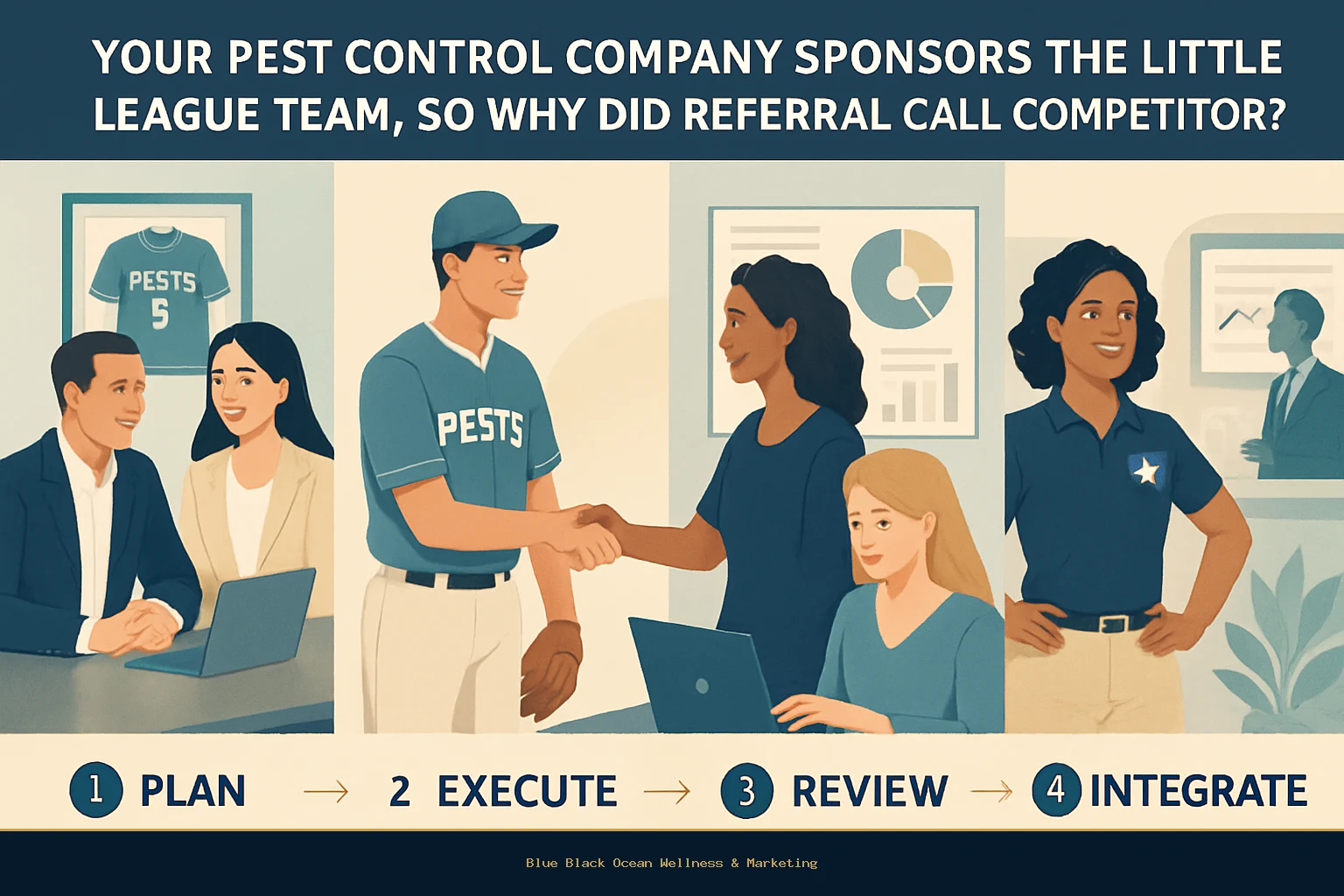
Do we need to spend more on sponsorships to see a difference?
No. The mechanism described here is about converting relationships and sponsorships you are already paying for into content and traceable attribution, not about increasing the sponsorship budget itself.
What if our HOA or partner contact does not want to be filmed or quoted?
That is common and fine. Start with the documentation that does not require their direct involvement, such as filming your own technician’s work, and ask for a written quote later once trust in the process is established. A short written mention is often easier for a partner to agree to than being filmed.
How long before we see this reflected in actual calls?
There is no fixed timeline, and any claim of a guaranteed number of weeks would be inaccurate. What typically becomes visible first is the internal habit itself: a growing attribution log and more specific, dated content tied to real neighborhoods and partners. That foundation is what eventually supports a clearer picture of which relationships produce calls.
Isn’t asking “how did you hear about us” just for tracking ad spend?
It is often used that way, but the same question is just as valuable for tracking sponsorships, HOA relationships, and word-of-mouth from real estate agents, categories of marketing spend that otherwise generate zero measurable data on their own.
Our website already lists our service area. Isn’t that enough?
A service area list answers where you work. It does not answer why a new resident should trust you specifically, or confirm what a neighbor already told them informally. Community proof, specific mentions, recent photos, partner quotes, dated posts, is what closes that gap.
What to Do This Week
Pick one upcoming sponsored event, community service day, or partner visit already on your calendar. Assign one person to film three to five short clips. Add one line to your new customer intake process asking how they heard about your company. Start a simple shared spreadsheet and log every answer for the next two weeks. That is the entire commitment required to start seeing where your community relationships are actually working.
If you want a second set of eyes on where your specific offline-to-online chain is breaking, Blue Black Ocean offers a Free Marketing Direction Review focused on exactly this gap: your current sponsorships and partnerships, your website and Google Business Profile as they stand today, and whether a new resident who hears your name locally would find confirmation online or a reason to call someone else. There is no obligation and no guaranteed outcome promised, just a clear look at where the bridge between your community and your calendar is missing a plank.
Trả lời nhanh: Công ty kiểm soát côn trùng tài trợ sự kiện, kết nối cộng đồng nhưng không có cuộc gọi tương xứng vì chưa biến mối quan hệ ngoại tuyến thành nội dung và thói quen theo dõi nguồn khách. Giải pháp là ghi lại, chia sẻ và hỏi khách mỗi lần họ liên hệ xem họ biết đến công ty từ đâu.
Mục lục
- Sự thật cần nhìn thẳng
- Những điểm chính cần ghi nhớ
- Ví dụ minh họa (tình huống tổng hợp, không phải khách hàng thật)
- Quy trình biến quan hệ cộng đồng thành cuộc gọi thật
- Câu hỏi thường gặp
- Công ty nhỏ, ít nhân sự thì có làm được quy trình này không?
- Nếu đối tác (ban quản lý khu dân cư, môi giới) ngại xuất hiện trên mạng xã hội thì sao?
- Làm sao biết mối quan hệ cộng đồng nào đáng đầu tư tiếp, mối quan hệ nào nên dừng?
- Giải pháp Blue Black Ocean đề xuất
Một công ty kiểm soát côn trùng ở địa phương tài trợ đội bóng thiếu niên trong khu vực, có banner tại hội chợ cộng đồng mùa thu, và kỹ thuật viên quen mặt với người quản lý của ba khu dân cư. Một người mới chuyển đến hỏi hàng xóm xem nên gọi công ty diệt côn trùng nào, hàng xóm nhắc đúng tên công ty đó nhưng không nhớ rõ họ khác biệt ở điểm gì. Người này lên Google tìm kiếm và cuối cùng gọi cho đối thủ có website rõ ràng hơn.
Đây không phải là chuyện hiếm. Rất nhiều chủ doanh nghiệp kiểm soát côn trùng chi tiền tài trợ mỗi mùa, xây dựng quan hệ với ban quản lý khu dân cư, môi giới bất động sản, trường học, nhưng không thể trả lời câu hỏi đơn giản: những mối quan hệ đó có thực sự mang lại khách hàng không?
Sự thật cần nhìn thẳng
Tài trợ và kết nối cộng đồng tạo ra sự quen mặt, nhưng sự quen mặt không tự động chuyển thành cuộc gọi. Khi ai đó nghe tên công ty từ hàng xóm, từ banner sự kiện, hay từ người quản lý khu dân cư, họ vẫn sẽ làm một việc trước khi gọi: tìm tên công ty đó trên Google.
Nếu lúc đó website mờ nhạt, hồ sơ doanh nghiệp trên Google thiếu thông tin, không có hình ảnh nào cho thấy công ty thực sự hoạt động trong khu vực đó, thì sự quen mặt ngoài đời không giúp được gì. Khách hàng tiềm năng quay sang đối thủ vì đối thủ trả lời rõ ràng hơn ngay khi họ vừa tìm kiếm.
Nguyên nhân gốc không phải vì công ty tài trợ sai sự kiện hay chọn sai đối tác. Nguyên nhân là không ai ghi lại những gì đã xảy ra tại sự kiện đó, không ai xin một câu giới thiệu ngắn từ người quản lý khu dân cư, và không ai hỏi khách hàng mới câu đơn giản nhất: “Anh chị biết đến công ty mình qua đâu?” Vì không hỏi, nên không ai trong công ty biết mối quan hệ nào đang thực sự sinh ra khách hàng, và mối quan hệ nào chỉ là thiện chí không mang lại gì thêm.
Kết quả là công ty trả tiền tài trợ mỗi năm để xây lại đúng một loại uy tín, thay vì để uy tín đó tích lũy dần và ngày càng lớn hơn theo thời gian.
Những điểm chính cần ghi nhớ
- Uy tín cộng đồng và sự hiện diện trên mạng không phải hai việc tách rời, đó là một hệ thống liền mạch.
- Một buổi tài trợ hoặc một mối quan hệ với khu dân cư chỉ sinh ra khách hàng mới khi được ghi lại bằng hình ảnh, video hoặc lời giới thiệu có thể chia sẻ.
- Nếu không hỏi khách mới biết đến công ty từ đâu, chủ doanh nghiệp sẽ không bao giờ biết nên tiếp tục đầu tư vào mối quan hệ nào.
- Website và hồ sơ doanh nghiệp trên Google cần phản ánh rõ khu vực phục vụ và sự tham gia cộng đồng, vì đó là nơi khách kiểm tra lại trước khi gọi.
- Không cần tài trợ nhiều hơn, cần biến những gì đã tài trợ thành nội dung có thể tìm thấy được.
Ví dụ minh họa (tình huống tổng hợp, không phải khách hàng thật)
Hãy hình dung một công ty kiểm soát côn trùng hư cấu, tạm gọi là Công ty ABC Pest, tài trợ một ngày dọn dẹp sân vườn cộng đồng tại một khu dân cư và có quan hệ hợp tác với một công ty quản lý bất động sản trong vùng. Nếu không ai ghi hình buổi hoạt động đó, không ai xin người quản lý bất động sản một câu giới thiệu ngắn để đăng lên fanpage, và không ai hỏi khách mới gọi đến trong tháng sau có phải họ nghe về công ty từ sự kiện đó không, thì công ty ABC Pest sẽ không bao giờ biết buổi tài trợ đó có đáng để lặp lại năm sau hay không. Đây chỉ là ví dụ minh họa để làm rõ vấn đề, không phải kết quả thực tế của khách hàng nào.
Quy trình biến quan hệ cộng đồng thành cuộc gọi thật
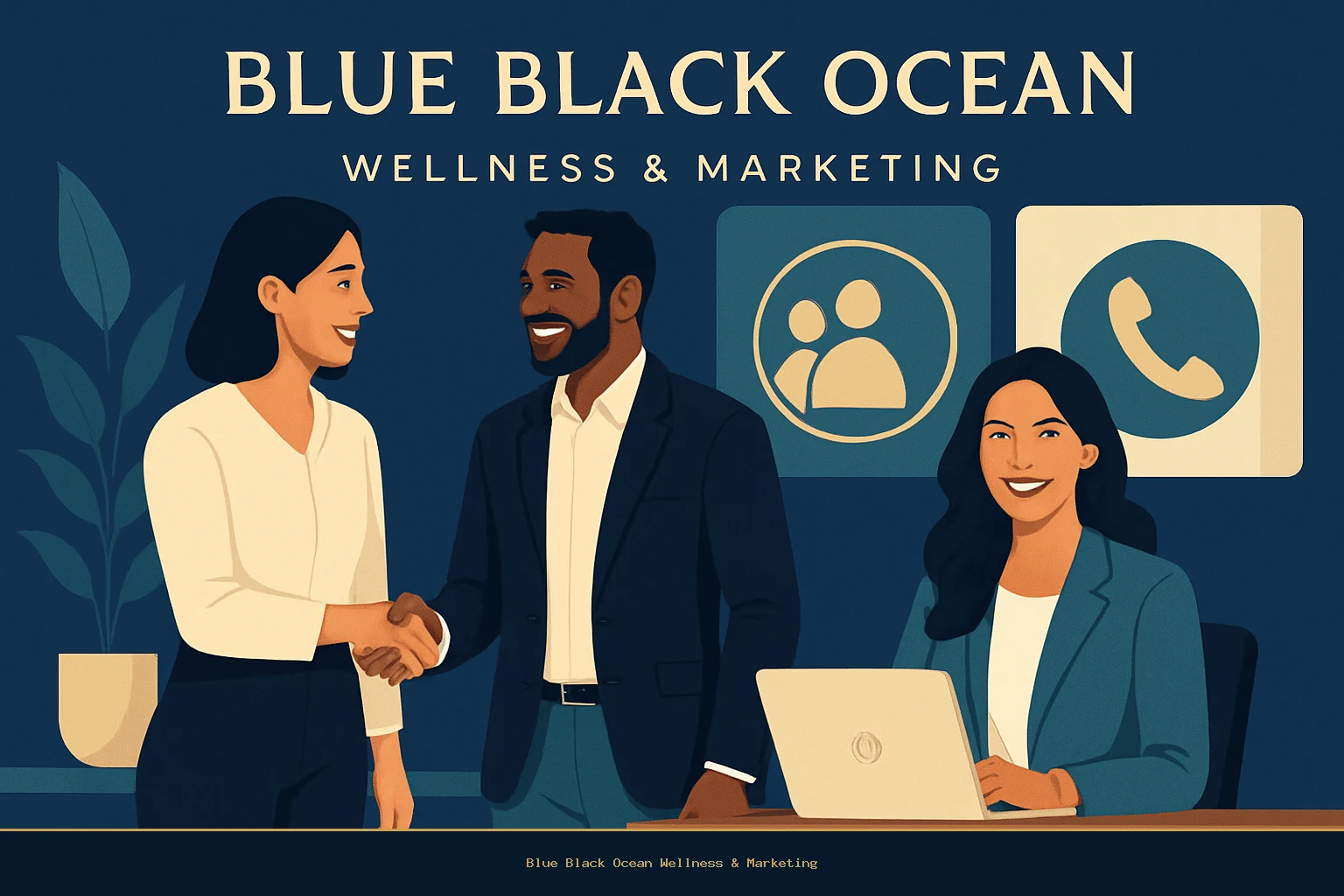
Dưới đây là checklist thực tế mà một công ty kiểm soát côn trùng có thể áp dụng ngay, không cần công cụ phức tạp.
- Ghi lại mọi hoạt động cộng đồng bằng hình ảnh hoặc video ngắn. Trước khi đến sự kiện tài trợ hay buổi phục vụ khu dân cư, phân công một người chụp hoặc quay 3 đến 5 đoạn ngắn: lúc đến, lúc đang làm việc, và một đoạn trò chuyện ngắn với người quản lý hoặc ban tổ chức.
- Xin một câu giới thiệu ngắn từ đối tác. Sau mỗi lần hợp tác với ban quản lý khu dân cư, môi giới bất động sản, hoặc trường học, hỏi họ có sẵn lòng cho một câu nhận xét ngắn để đăng lên fanpage hoặc website không. Không cần dài, chỉ cần thật.
- Đăng nội dung đều đặn, không chỉ vào dịp sự kiện. Nội dung từ những hoạt động cộng đồng nên xuất hiện xen kẽ với nội dung dịch vụ thông thường, để người xem thấy công ty gắn bó với khu vực quanh năm, không chỉ lúc có tài trợ.
- Thêm một câu hỏi vào quy trình tiếp nhận khách mới. Dù là gọi điện hay điền form trên website, luôn hỏi: “Anh chị biết đến công ty mình qua đâu?” Ghi lại câu trả lời vào một bảng theo dõi đơn giản, không cần phần mềm phức tạp.
- Rà soát website và hồ sơ doanh nghiệp trên Google mỗi quý. Đảm bảo khu vực phục vụ được ghi rõ, có hình ảnh từ hoạt động cộng đồng, và không có thông tin lỗi thời khiến khách nghi ngờ.
- Xem lại bảng theo dõi nguồn khách mỗi tháng. Xác định mối quan hệ hoặc sự kiện nào thực sự dẫn đến khách hàng gọi, từ đó quyết định năm sau nên tiếp tục đầu tư vào đâu.
Trước đây, doanh nghiệp kiểm soát côn trùng thường phải dựa vào tờ rơi phát tận nhà, thư gửi qua bưu điện, quảng cáo trên báo địa phương hoặc bảng quảng cáo ngoài trời để người dân trong khu vực biết đến mình. Những kênh đó vẫn có giá trị riêng, nhưng khó đo lường ai thực sự phản hồi.
Ngày nay, mạng xã hội và các nền tảng tìm kiếm cho phép công ty tiếp cận đúng nhóm cư dân trong khu vực phục vụ, thử nhiều cách kể chuyện khác nhau về cùng một buổi tài trợ, và theo dõi ai thực sự phản hồi. Điều này không có nghĩa mạng xã hội luôn rẻ hơn hoặc luôn hiệu quả hơn tờ rơi hay banner ngoài trời trong mọi trường hợp. Công cụ chỉ là công cụ. Kết quả chỉ đến khi chiến lược nội dung, cách nhắm đúng khu vực, website rõ ràng và thói quen theo dõi nguồn khách được kết nối với nhau thành một hệ thống, thay vì làm rời rạc từng việc một.
Câu hỏi thường gặp
Công ty nhỏ, ít nhân sự thì có làm được quy trình này không?
Có. Việc quay video không cần thiết bị chuyên nghiệp, chỉ cần điện thoại và một người sẵn sàng ghi lại vài đoạn ngắn mỗi lần có hoạt động cộng đồng. Câu hỏi “biết đến công ty qua đâu” cũng không tốn thời gian, chỉ cần thêm vào kịch bản trả lời điện thoại hoặc form đặt lịch có sẵn.
Nếu đối tác (ban quản lý khu dân cư, môi giới) ngại xuất hiện trên mạng xã hội thì sao?
Không cần ép. Có thể xin họ một câu nhận xét bằng văn bản để đăng kèm tên chức danh, không nhất thiết phải quay video có mặt họ. Nhiều đối tác sẵn lòng viết một câu ngắn nếu được hỏi lịch sự và không mất nhiều thời gian của họ.
Làm sao biết mối quan hệ cộng đồng nào đáng đầu tư tiếp, mối quan hệ nào nên dừng?
Chỉ có cách duy nhất: theo dõi nguồn khách qua thời gian. Sau vài tháng ghi nhận câu trả lời “biết đến qua đâu,” chủ doanh nghiệp sẽ thấy rõ mối quan hệ nào thực sự tạo ra cuộc gọi và mối quan hệ nào chỉ dừng lại ở thiện chí. Không cần đoán, chỉ cần có thói quen hỏi và ghi lại đều đặn.
Giải pháp Blue Black Ocean đề xuất
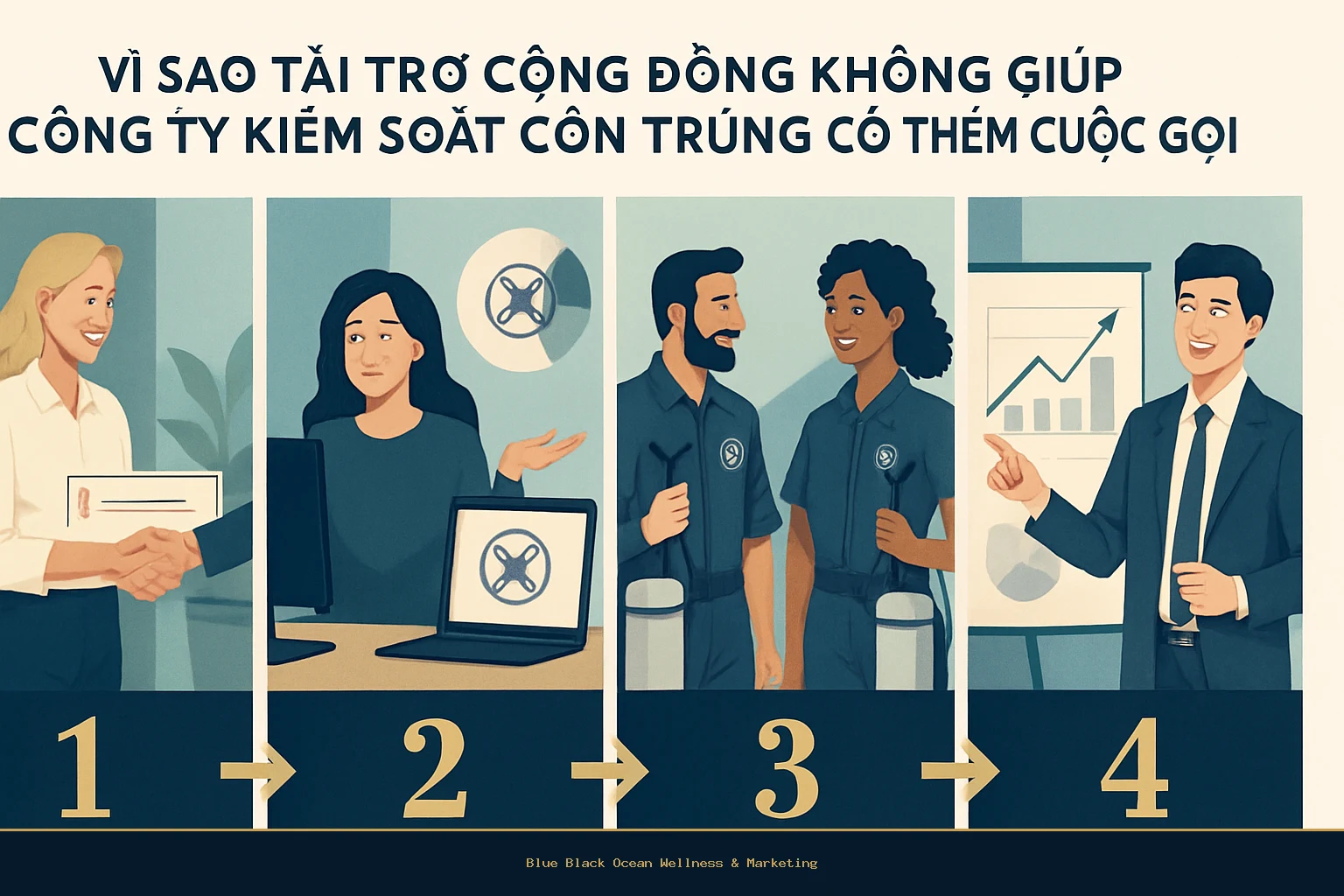
Blue Black Ocean bắt đầu bằng việc xác định chính xác điểm nghẽn: liệu công ty có đang tài trợ và kết nối cộng đồng nhưng không ghi lại gì, không xin lời giới thiệu từ đối tác, không đăng nội dung đều đặn, hay không có thói quen hỏi khách mới biết đến công ty từ đâu. Mỗi điểm nghẽn cần một cách xử lý khác nhau, và việc chẩn đoán đúng trước khi hành động giúp tránh lãng phí công sức vào chỗ không phải vấn đề chính.
Sau khi xác định điểm nghẽn, Blue Black Ocean trực tiếp quay video tại các sự kiện tài trợ, buổi phục vụ khu dân cư, hoặc những lần hợp tác với đối tác địa phương của công ty. Đoạn video này sau đó được dùng để xây dựng lịch đăng bài đều đặn trên fanpage, giúp cộng đồng thấy công ty gắn bó với khu vực quanh năm chứ không chỉ xuất hiện vào dịp có tài trợ.
Song song đó, Blue Black Ocean xây dựng hoặc cải thiện website và hồ sơ doanh nghiệp trên Google để phản ánh rõ khu vực phục vụ, hoạt động cộng đồng, và những gì khách hàng cần biết trước khi liên hệ. Mục tiêu là khi ai đó nghe tên công ty từ hàng xóm hoặc từ một sự kiện địa phương và lên mạng tìm kiếm, những gì họ thấy sẽ xác nhận lại lời giới thiệu đó, thay vì khiến họ nghi ngờ và chuyển sang tìm đối thủ khác.
Nếu công ty của bạn đang tài trợ, kết nối cộng đồng nhưng không chắc điều đó có đang mang lại khách hàng thực sự hay không, hãy liên hệ với Blue Black Ocean để đăng ký một buổi Đánh Giá Định Hướng Marketing Miễn Phí. Buổi đánh giá không đi kèm cam kết hay bảo đảm kết quả cụ thể, chỉ giúp bạn nhìn rõ hơn điểm nghẽn hiện tại và những bước có thể làm tiếp theo. Bạn có thể bắt đầu bằng cách ghé trang Contact để đặt lịch trao đổi.