
Why a Fully Booked Nail Salon Still Loses Repeat ClientsVì Sao Khách Nail Không Quay Lại Dù Không Hề Phàn Nàn Gì

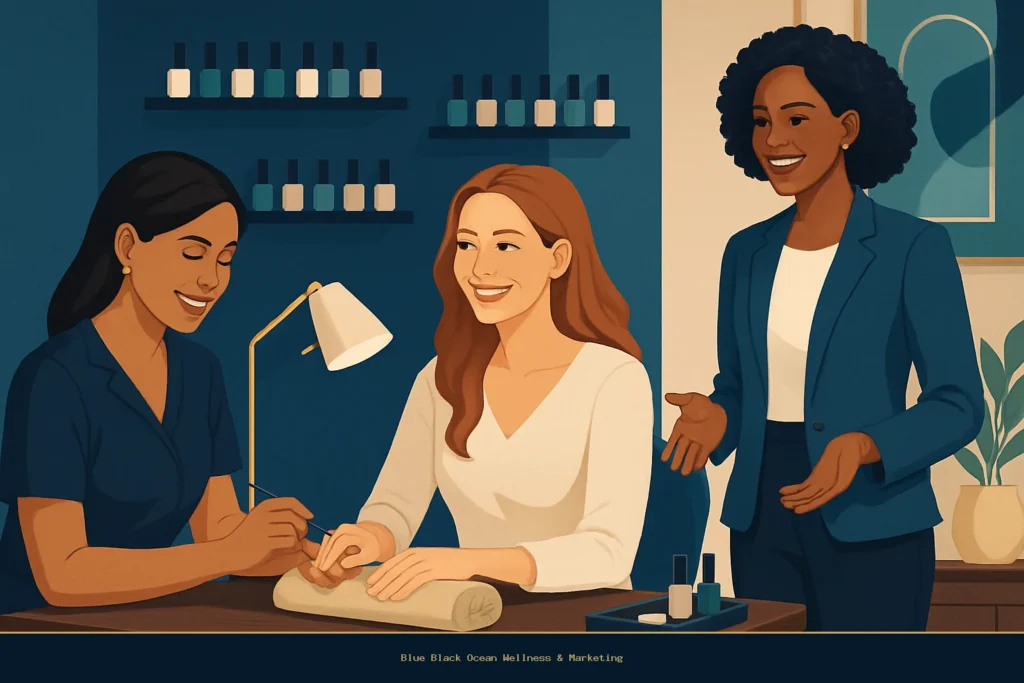
It’s a fully booked Saturday. Every chair is filled, the phone keeps buzzing with walk-in requests, and by closing time the owner feels like the salon is thriving. But when they pull up the appointment book from a month ago, something nags at them: half of last month’s new clients never came back. The Saturday rush is real, but it’s built on a rotating cast of first-timers, not a steady base of regulars. Nobody complained. The nails looked good. So why didn’t they rebook?
Table of Contents
- The Uncomfortable Truth
- Why This Keeps Happening
- Key Takeaways
- The Three-Part System That Fixes This
- 1. A Consistent Visual Identity
- 2. A Rebooking Habit Built Into Checkout
- 3. A Steady Rhythm of Real Salon Content
- A Practical Checklist to Start This Week
- How Blue Black Ocean Approaches This Problem
- Frequently Asked Questions
- Is a loyalty card or punch-card program a good fix for low rebooking?
- How often should a salon post content to build visibility between visits?
- What if my staff feel awkward asking clients to rebook at checkout?
- Do I need a full rebrand to fix inconsistent positioning?
- What to Do Next
This is one of the most common blind spots in the nail salon business. A salon can be busy and still be losing the retention game, because being busy and being chosen on purpose are two different things.
The Uncomfortable Truth
The uncomfortable truth is this: most salons that struggle with rebooking don’t have a service problem, they have a positioning problem. The client’s nails were fine. The technician did solid work. But nothing about the visit told that client why this salon, specifically, deserved to be “their” salon instead of just “a” salon they happened to try once.
When a client can’t answer the question “what makes this place different?”, they default to the two variables that always exist: price and convenience. That means next time they need a fill or a fresh set, they go wherever is closest, whoever has a same-day slot, or whoever is running a better promo that week. The salon becomes interchangeable, and interchangeable businesses can’t build loyalty, because there’s nothing distinct to be loyal to.
This isn’t a discount problem. Adding another 10% off card or a punch-card loyalty program doesn’t fix it, because those tools assume the client already wants to come back and just needs a small incentive. The real issue happens earlier: the client never formed a clear picture of the salon’s identity in the first place, and nobody asked them to commit to a next visit while they were still in the chair.
Why This Keeps Happening
- The salon’s identity lives in the owner’s head, not in what clients see. The owner knows their team is skilled, their space is clean, and their designs are current, but none of that is documented or shown consistently anywhere a client would encounter it before or after their visit.
- There’s no rebooking prompt at checkout. The client pays, maybe books a “sometime soon” mental note, and walks out. Without a specific next appointment or a clear invitation, that mental note evaporates within days.
- There’s no reminder between visits. If the salon’s online presence is inconsistent, outdated, or generic-looking, the client has no reason to think about the salon again until they happen to need a manicure and search nearby options from scratch.
Key Takeaways
- A full appointment book does not equal strong retention; track repeat visits separately from total visits.
- Clients default to price and convenience only when a salon fails to show them a clear, distinct identity.
- Retention is built at two moments: the visual first impression (in-salon and online) and the checkout conversation.
- Consistent, real content (actual designs, actual technicians, actual space) does more retention work than another discount.
- Fixing positioning is a documentation and habit problem, not a bigger-budget problem.
The Three-Part System That Fixes This
Instead of reaching for another promotion, a salon owner should focus on three specific, controllable levers. Each one addresses a different point in the client’s decision cycle.
1. A Consistent Visual Identity
This means the salon looks and feels the same whether a prospective client sees the storefront, scrolls the fanpage, or lands on the website. Consistent doesn’t mean expensive or elaborate. It means the same color palette, the same tone of photography, the same style of finished work being shown everywhere, so a client recognizes the salon’s “look” the same way they’d recognize a favorite coffee shop’s branding.
2. A Rebooking Habit Built Into Checkout
This is a conversation, not a coupon. Before the client stands up from the chair, staff ask a direct question: “Would you like to grab your next appointment now, maybe in three or four weeks?” This works because it converts a vague intention (“I should come back sometime”) into a specific commitment on the calendar. A quick confirmation message afterward reinforces the appointment rather than letting it fade from memory.
3. A Steady Rhythm of Real Salon Content
Clients who follow the salon’s fanpage or check the website between visits should see actual proof of what makes the salon distinct: real finished sets, the real space, the real technicians at work. Generic stock photos or borrowed design inspiration do the opposite of what’s needed; they make the salon look like every other salon. Consistency matters more than volume. A steady, believable rhythm beats a sporadic burst of posts followed by silence.
A Practical Checklist to Start This Week
- Audit your current online presence. Does the fanpage and website actually show your salon’s real work, or does it look like a generic template?
- Pick one lever to start with. Either film 3 to 5 short phone videos this week of finished nail sets and the salon space, or write down the exact script staff will use at checkout to prompt the next booking.
- Use it with every client for seven days. Consistency, not perfection, is what builds the habit for both staff and clients.
- Review what you notice. Are more clients accepting the rebooking prompt? Is the salon’s online presence starting to look more distinct and current?
- Repeat and expand. Once the habit sticks with staff, layer in the second lever the following week.
How Blue Black Ocean Approaches This Problem
When a salon comes to Blue Black Ocean with a retention or positioning concern, the first step is diagnosis: is the gap happening in the physical salon experience, on the website, or in the social presence? Each of those breaks differently and needs a different fix.
From there, the work often includes recording short video content directly on-site (real designs, real technicians, real atmosphere), maintaining a consistent publishing rhythm on the salon’s fanpage so past clients keep seeing proof of the salon’s identity, and building or improving the website so it functions as an online showroom rather than a static contact page.
In the case of Royal Nails Salon Spa, this looked like on-site video recording, a consistent content publishing schedule, and a rebuilt website designed to let prospective clients see the actual service style, atmosphere, and current activity before they ever booked or visited. The goal was clarity and consistency, giving clients a real reason to recognize and choose the salon again, not a numbers promise.
Frequently Asked Questions
Is a loyalty card or punch-card program a good fix for low rebooking?
It can help at the margins, but it doesn’t solve the root issue. If a client never formed a clear sense of why the salon is different, a discount alone won’t create loyalty; it just delays the decision to shop around.
How often should a salon post content to build visibility between visits?
A steady, predictable rhythm matters more than a specific number. The point is that past clients see consistent proof of your work often enough that the salon stays top of mind, rather than disappearing between visits.
What if my staff feel awkward asking clients to rebook at checkout?
Give them an exact script rather than a vague instruction. A specific, low-pressure question like “Want to grab your next date before you head out?” feels natural once it becomes routine, and clients generally appreciate the ease of not having to think about scheduling later.
Do I need a full rebrand to fix inconsistent positioning?
Not necessarily. Often the fix is documenting and presenting what already makes the salon distinctive, consistently, rather than inventing a new identity from scratch.
What to Do Next
Retention isn’t fixed by working harder to fill Saturdays. It’s fixed by making sure every client who sits in the chair understands, clearly and consistently, why this salon deserves a spot on their calendar again. That starts with one visible lever this week, not a full overhaul.
If you’re not sure where your salon’s positioning is breaking down, whether it’s the in-salon experience, the website, or the social presence, Blue Black Ocean offers a Free Marketing Direction Review to help identify exactly where clarity is missing and what a realistic first step looks like. No guarantees, just a clear-eyed look at where the gap is and what to fix first.
Trả lời nhanh: Khách không quay lại tiệm nail thường không phải vì dịch vụ tệ, mà vì tiệm chưa cho khách một lý do rõ ràng để nhớ và chọn lại. Muốn khách quay lại đều đặn, tiệm cần ba thứ: hình ảnh nhận diện nhất quán, thói quen mời đặt lịch ngay tại quầy thanh toán, và nội dung thật được đăng đều đặn để khách nhớ đến tiệm giữa hai lần ghé.
Mục lục
Một buổi tối thứ Bảy, tiệm kín ghế từ sáng đến tối. Chủ tiệm nhìn lịch mà thấy yên tâm. Nhưng nếu để ý kỹ, phần lớn khách mới đến từ một bài quảng cáo giảm giá, làm xong bộ nail đẹp, rồi biến mất không quay lại. Không ai phàn nàn gì cả. Vấn đề chính là ở chỗ đó: không phàn nàn không có nghĩa là khách sẽ nhớ để quay lại.
Sự thật cần nhìn thẳng
Rất nhiều chủ tiệm nail nghĩ rằng chỉ cần làm đẹp, làm sạch, làm đúng hẹn là khách sẽ tự động quay lại. Thực tế không phải vậy. Khách hàng hôm nay có quá nhiều lựa chọn xung quanh, tiệm nào cũng làm đẹp, cũng sạch sẽ, cũng đúng giờ ở mức tối thiểu. Nếu tiệm không cho khách một lý do cụ thể để phân biệt mình với tiệm kế bên, khách sẽ chọn theo giá hoặc theo sự tiện đường vào lần sau.
Đây không phải câu chuyện về tay nghề kém. Đây là câu chuyện về việc tiệm chưa từng chủ động xây dựng một hình ảnh riêng, rõ ràng, dễ nhận ra trong đầu khách. Khách bước ra khỏi tiệm với bộ nail đẹp, nhưng không mang theo cảm giác “đây là tiệm của mình” mà chỉ có cảm giác “mình vừa làm nail xong”.
Gốc rễ vấn đề nằm ở việc bản sắc của tiệm chỉ tồn tại trong đầu chủ tiệm, chứ chưa được thể hiện ra bên ngoài một cách nhất quán. Không có nơi nào để khách xem lại các mẫu nail đẹp tiệm từng làm. Không có lời nhắc đặt lịch lần sau ngay khi khách thanh toán. Không có nội dung nào xuất hiện đều đặn để nhắc khách rằng tiệm vẫn đang hoạt động, vẫn đang làm những mẫu mới, vẫn là lựa chọn tốt.
Những điểm chính cần ghi nhớ
- Khách không quay lại không đồng nghĩa với dịch vụ kém; thường là do thiếu lý do để nhớ và thiếu thói quen đặt lịch tiếp theo.
- Một tiệm nail chỉ thắng bằng giá và khuyến mãi sẽ luôn phải cạnh tranh với tiệm rẻ hơn ở gần đó.
- Hình ảnh nhận diện nhất quán (không gian, phong cách mẫu nail, cách trình bày trên mạng) giúp khách nhớ tiệm rõ hơn là chỉ nhớ một lần trải nghiệm đơn lẻ.
- Thói quen mời đặt lịch tiếp theo cần được đưa vào ngay lúc khách thanh toán, không phải chờ khách tự nhớ ra.
- Nội dung thật, đăng đều đặn, quan trọng hơn nội dung đẹp nhưng đăng thất thường.
Quy trình thực tế để xây dựng thói quen quay lại
- Xác định điều khiến tiệm khác biệt. Có thể là phong cách mẫu nail riêng, không gian tiệm, cách chăm sóc khách, hoặc đội thợ có kỹ thuật đặc trưng. Viết ra thành một câu ngắn mà nhân viên nào cũng có thể nói lại được.
- Chuẩn hóa hình ảnh ở mọi điểm chạm. Không gian tiệm, ảnh trên mạng xã hội, và cách trưng bày mẫu nail nên cùng một phong cách, để khách nhìn đâu cũng nhận ra đúng tiệm.
- Đưa lời mời đặt lịch vào quy trình thanh toán. Nhân viên hỏi khách muốn quay lại vào ngày nào trước khi khách rời tiệm, thay vì để khách tự quyết định sau.
- Đăng nội dung thật đều đặn. Quay lại mẫu nail vừa hoàn thành, không gian tiệm, không khí làm việc hàng ngày. Không cần cầu kỳ, chỉ cần đều và đúng thực tế.
- Theo dõi tín hiệu, không chỉ theo dõi lịch đầy. Xem khách cũ có quay lại trong chu kỳ dự kiến không, khách mới có đặt lịch lần hai không, thay vì chỉ nhìn số ghế được lấp đầy mỗi ngày.
Trước đây, một tiệm nail muốn được nhiều người biết đến thường phải phát tờ rơi, gửi thư quảng cáo, hoặc thuê bảng hiệu ngoài trời. Cách này tốn kém và khó biết được ai thực sự đã xem. Mạng xã hội ngày nay cho tiệm cơ hội tiếp cận đúng nhóm khách ở gần, thử nhiều cách trình bày khác nhau, và nhìn được khách phản hồi ra sao. Điều này không có nghĩa là mạng xã hội luôn rẻ hơn hoặc luôn hiệu quả hơn trong mọi trường hợp. Kết quả chỉ đến khi chiến lược định vị, nội dung thật, cách quảng cáo, website và quy trình mời đặt lịch được kết nối với nhau một cách nhất quán.
Giải pháp Blue Black Ocean đề xuất
Với một tiệm nail đang gặp tình trạng khách mới không quay lại, Blue Black Ocean bắt đầu bằng việc chẩn đoán điểm nghẽn thực sự nằm ở đâu: có thể là trải nghiệm tại tiệm chưa để lại dấu ấn, có thể là fanpage lâu không cập nhật, có thể là website không cho khách hình dung được phong cách và không khí tiệm trước khi đặt lịch.
Sau khi xác định điểm nghẽn, Blue Black Ocean quay video ngắn ngay tại tiệm, ghi lại đúng những gì tiệm đang làm: mẫu nail thật, không gian thật, đội thợ thật đang làm việc. Nội dung này được đăng đều đặn trên fanpage, để khách cũ liên tục thấy tiệm vẫn hoạt động, vẫn có mẫu mới, vẫn đáng để quay lại.
Song song đó, Blue Black Ocean xây dựng hoặc cải thiện website để nó hoạt động như một phòng trưng bày trực tuyến, nơi khách có thể xem trước phong cách, không khí, và các hoạt động hiện tại của tiệm trước khi quyết định đặt lịch. Đây chính xác là cách Blue Black Ocean đã triển khai cho Royal Nails Salon Spa: quay video tại salon, đăng nội dung mẫu nail và hình ảnh salon đều đặn, và phát triển website thành nơi khách hiểu rõ dịch vụ, phong cách, không khí tiệm trước khi đặt lịch hoặc ghé trực tiếp. Những thay đổi quan sát được là sự rõ ràng hơn trong cách trình bày dịch vụ, tính nhất quán trong hình ảnh, và sự hiện diện thường xuyên hơn trên môi trường số.
Việc có thể làm ngay trong tuần này
Chủ tiệm hoặc quản lý chọn một trong hai việc sau và bắt đầu ngay: quay ba đến năm đoạn video ngắn bằng điện thoại về các mẫu nail vừa hoàn thành và không gian tiệm để đăng trong tuần, hoặc viết ra câu chính xác nhân viên sẽ nói với khách lúc thanh toán để mời đặt lịch lần sau, rồi áp dụng câu đó với mọi khách trong bảy ngày liên tục.
Câu hỏi thường gặp
Tiệm đã có nhiều đánh giá tốt trên mạng, tại sao khách vẫn không quay lại?
Đánh giá tốt cho thấy khách hài lòng tại thời điểm đó, nhưng không tự động tạo thói quen quay lại. Nếu không có lời mời đặt lịch cụ thể và không có gì nhắc khách nhớ đến tiệm sau đó, đánh giá tốt vẫn có thể không dẫn đến lần ghé thứ hai.
Có cần giảm giá để giữ chân khách không?
Giảm giá có thể kéo khách quay lại một lần, nhưng không xây dựng được thói quen lâu dài. Khách quen với giảm giá sẽ chỉ quay lại khi có giảm giá tiếp theo. Xây dựng bản sắc rõ ràng và thói quen đặt lịch bền vững hơn nhiều so với phụ thuộc vào khuyến mãi.
Tiệm nhỏ, ít nhân sự, có đủ sức duy trì đăng nội dung đều đặn không?
Không cần nội dung cầu kỳ. Một vài đoạn video ngắn quay bằng điện thoại, ghi lại đúng công việc hàng ngày, đăng đều đặn theo lịch cố định, đã đủ để tạo hiệu quả. Vấn đề không nằm ở quy mô sản xuất mà nằm ở tính đều đặn và tính xác thực.
Nếu tiệm đang gặp đúng tình trạng khách mới đến rồi không quay lại, đây là lúc nên nhìn lại cách tiệm đang thể hiện bản sắc của mình, cả tại chỗ lẫn trên mạng. Blue Black Ocean sẵn sàng trò chuyện cụ thể về tình trạng của tiệm qua một buổi tư vấn miễn phí về định hướng marketing, không cam kết kết quả trước, chỉ tập trung vào việc nhìn đúng vấn đề và đề xuất hướng đi phù hợp. Hãy ghé trang Liên hệ để đặt lịch trao đổi.