
When Your AI Chatbot Quotes the Wrong Price: A Nail Salon’s Trust ProblemAI Tự Động Trả Lời Khách Tiệm Nail: Ai Đang Kiểm Tra Trước Khi Gửi?

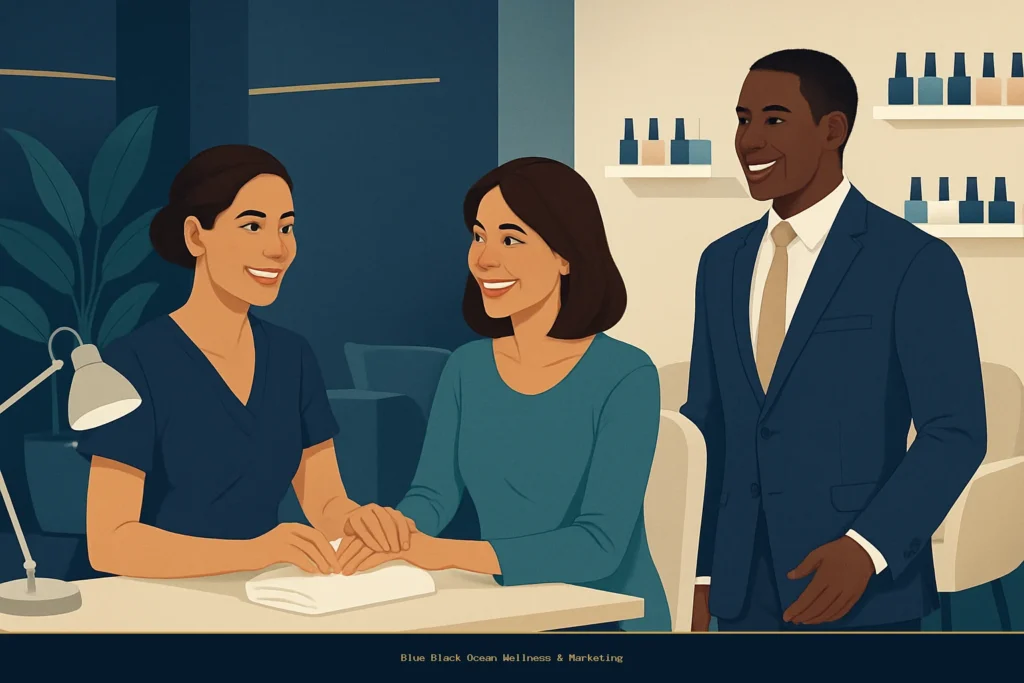
A client walks into your salon expecting a gel-and-dip combo at the price your Messenger chatbot quoted her. That price was wrong. The service she wants isn’t even something your technicians offer that way. Now your front desk staff is doing damage control on a service you never agreed to sell, at a price you never set, while three other clients wait in the lobby. This is not a hypothetical. It is what happens the moment a salon turns on AI automation without ever checking what it actually says to customers.
Table of Contents
- The Uncomfortable Truth
- Why This Keeps Happening: The Missing Layer
- Where the Risk Actually Shows Up
- Key Takeaways
- The Governance Workflow: A Practical Process
- Step 1: Build One Living Source-of-Truth Document
- Step 2: Assign a Named Daily Reviewer
- Step 3: Set a Hard Rule on Negative Reviews and Complaints
- Step 4: Define Data Boundaries
- Step 5: Review Weekly Against Real Outcomes
- A Decision Framework: When to Automate, When to Keep It Human
- How Blue Black Ocean Approaches This Problem
- Measuring Whether This Is Working
- Your Action Plan for This Week
- Frequently Asked Questions
- Does this mean I should turn off my AI chatbot entirely?
- How much time does a human-review workflow actually take?
- What if I don’t have staff to spare for this?
- Can AI-generated captions and website content still sound like my brand?
- Where to Go From Here
If you have added a chatbot to Messenger, turned on an AI caption generator for Instagram, or started using an AI tool to draft replies to Google reviews, you made a reasonable decision. Answering the same questions about pricing and hours forty times a day is exhausting, and automation genuinely saves time. The mistake is not the AI. The mistake is assuming it can run unsupervised.
The Uncomfortable Truth
Here is the part most salon owners do not want to hear: the moment you turned on that chatbot or auto-reply tool, you delegated your brand voice, your pricing accuracy, and your customer relationships to software that has never set foot in your salon. It doesn’t know that your senior technician left last month. It doesn’t know you raised gel prices in January. It doesn’t know that the client leaving an angry review last week was upset about a specific technician, not your whole team. It only knows what it was trained on or what generic patterns it defaults to, and it will answer with total confidence even when it is completely wrong.
Customers do not experience this as “the technology made an error.” They experience it as “this salon doesn’t care enough to make sure I get the right information.” That perception is more damaging than a slow reply ever was. A client who waits four hours for a text back understands you were busy with clients. A client who gets an instant, confident, wrong answer feels like she was handed off to a machine that nobody is watching. Speed without accuracy does not read as efficient. It reads as careless.
And because these tools operate at scale, the wrong answer doesn’t happen once. It happens every time someone asks that same question, to every customer, until someone catches it. That is the real risk: not one bad interaction, but the same mistake repeated dozens of times before anyone notices.
Why This Keeps Happening: The Missing Layer
The root problem is not the AI tool itself. It is the absence of a governance layer between the tool and your customers. Most salons adopt automation exactly backward: they turn it on first and figure out the details later. There is no assigned person checking what goes out. There is no single, current document listing your actual prices, services, hours, and policies that the AI is grounded in. And there is no rule about what the tool is and isn’t allowed to say without a human signing off first.
Without that structure, the AI tool becomes what is effectively an unsupervised new employee who was never trained, never given a price sheet, and never told how your salon talks to upset clients. You would never let a brand-new hire respond to a one-star review or confirm appointment times without checking their work first. The AI deserves the same supervision, not because it is untrustworthy by nature, but because it has no actual knowledge of your business unless you give it one.
Where the Risk Actually Shows Up
- Pricing and service accuracy: Auto-replies quoting outdated prices, bundling services incorrectly, or promising a service your salon does not offer that way.
- Scheduling confirmations: Automated texts sending the wrong date, time, or technician name, which clients only discover when they show up.
- Review responses: AI-generated replies to negative reviews that sound generic, dismissive, or tone-deaf to the specific complaint, making the salon look worse than silence would have.
- Brand voice drift: Captions and replies that sound nothing like how your staff actually talks to clients in person, creating a disconnect between your online presence and the in-salon experience.
- Data handling: No clear boundary on what customer phone numbers, appointment history, or personal notes the AI tool can store, access, or reuse.
Key Takeaways
- AI automation is not the problem; unsupervised AI automation is.
- Customers interpret confidently wrong answers as a sign the salon does not care, which damages trust faster than a slow reply.
- The fix is a documented source of truth plus a named human reviewer, not abandoning automation altogether.
- Negative reviews and complaints should never receive an AI-generated reply without a human reading it first.
- Weekly review of AI output against real outcomes catches problems before they become a pattern of complaints.
The Governance Workflow: A Practical Process
The goal is not to remove AI from your marketing and customer communication. The goal is to put a human checkpoint between the tool and the customer, so speed and accuracy work together instead of against each other. This is the same sequence Blue Black Ocean uses when helping a salon rebuild its automation from the ground up.
Step 1: Build One Living Source-of-Truth Document
Create a single, current reference document with your actual service menu, prices, hours, technician availability patterns, and a short description of your brand’s tone (friendly and casual, upscale and quiet, family-oriented, whatever fits your salon). Every AI tool you use, whether it is a chatbot, a caption generator, or a review-reply assistant, should be grounded in this document, not left to guess or default to generic patterns. Whoever updates prices or hours in your point-of-sale system should update this document the same day.
Step 2: Assign a Named Daily Reviewer
Pick one person, whether that is you or a trusted front-desk staff member, whose job includes reading AI-generated messages before or shortly after they go out. This does not need to take long. Most days it means scanning the last batch of Messenger replies, the latest scheduled caption, and any automated confirmation texts to check for accuracy and tone. The point is that someone with real knowledge of the salon is watching, not assuming the tool is handling it correctly.
Step 3: Set a Hard Rule on Negative Reviews and Complaints
AI should never auto-reply to a negative review or an angry customer message without a human reading the specific complaint first and approving or editing the response. A generic “we’re sorry to hear that, please reach out to us” reply to a client who named a specific technician or a specific bad experience often makes the salon look more disconnected, not more responsive. This is the highest-risk category for tone-deaf automation and deserves a firm boundary.
Step 4: Define Data Boundaries
Decide explicitly what customer information (phone numbers, appointment history, past complaints) your AI tool is allowed to access, store, or reuse, and for how long. This protects your clients and protects you from tools that quietly retain more data than you realized, which matters both for privacy and for trust if a client ever asks how their information is being used.
Step 5: Review Weekly Against Real Outcomes
Once a week, sit down with your named reviewer and ask three questions: Were prices and service details accurate in everything the AI sent this week? Did the tone match how your salon actually talks to clients? Did any client receive wrong information that staff had to correct in person? Log the answers. Patterns show up fast, and small corrections now prevent repeated friction at the front desk later.
A Decision Framework: When to Automate, When to Keep It Human
Not every message needs the same level of scrutiny. A useful way to prioritize your reviewer’s time is to sort communication into three tiers:
- Low risk, light review: General hours-and-location replies that rarely change. Spot-check occasionally.
- Medium risk, daily review: Pricing questions, service descriptions, and appointment confirmations. Check these daily since they change with your menu and schedule.
- High risk, always human-approved: Negative reviews, specific complaints, and anything mentioning a named staff member or a refund request. These should never be answered by AI without a human reading and approving first.
The prerequisite for any of this working is the source-of-truth document from Step 1. Without it, even a careful human reviewer is checking AI output against nothing concrete, which turns review into guesswork.
How Blue Black Ocean Approaches This Problem
When a salon owner comes to Blue Black Ocean concerned about automation creating inconsistent or inaccurate customer communication, the approach starts with diagnosis before any tool changes: reading through recent chatbot conversations, review replies, and automated texts to identify exactly where accuracy or tone broke down, and prioritizing the highest-risk categories first, typically negative review responses and pricing accuracy.
From there, Blue Black Ocean works directly with the owner to build the reference source-of-truth document, covering current services, prices, hours, and brand tone in plain language that any AI tool or staff member can be grounded in. A lightweight human-review checkpoint is set up so nothing publishes without a quick accuracy and tone check, sized to fit the salon’s actual staffing rather than adding a burdensome new task.
One verified example of this in practice is Royal Nails Salon Spa. Blue Black Ocean records video content on-site at the salon, maintains consistent posting of nail design and salon content, and builds out the salon’s website as an online showroom, so a prospective client can see current services, styles, and atmosphere clearly before ever calling or walking in. Every piece of content, from captions to website copy, goes through human review for accuracy and brand voice before it publishes. The observable result has been more consistent posting, a clearer and more accurate representation of services on the website, and a digital presence that actually matches what a client experiences walking through the door.
Measuring Whether This Is Working
You do not need complex analytics to know if your governance workflow is succeeding. Start with a simple baseline this week: count how many corrections your front-desk staff had to make in person because of wrong AI-generated information. Track that number weekly going forward as your leading indicator. If it trends down over a month, your review process is catching problems before they reach customers. If clients start mentioning that your online information (Messenger, Google Business, your website) matches what they experience in the chair, that is your real business outcome: consistency between what you say online and what you deliver in person. Review this monthly alongside your regular business check-ins, not as a separate project that gets forgotten.
Your Action Plan for This Week
- Who: You, or a named front-desk staff member you trust to know current pricing and policies.
- What: Read every AI-generated message sent in the last seven days: Messenger replies, review responses, and automated appointment texts.
- Flag: Mark anything with a wrong price, wrong hours, wrong service description, or a tone that does not sound like your salon.
- Document: Write the correct information into one shared document (a Google Doc or shared note works fine to start) that becomes your salon’s single source of truth going forward.
- Decide: Set the rule now that negative reviews and specific complaints get a human-written or human-approved reply, no exceptions, starting today.
Frequently Asked Questions
Does this mean I should turn off my AI chatbot entirely?
Not necessarily. The chatbot itself is not the problem; the absence of a review step is. If you build a source-of-truth document and assign someone to spot-check output regularly, you can keep the time savings while removing most of the risk. The tools worth keeping are the ones grounded in accurate, current information.
How much time does a human-review workflow actually take?
For most salons, daily review of pricing and appointment-related messages takes a few minutes, since it is a quick scan rather than a full rewrite. The bigger time investment is upfront: building the source-of-truth document once. After that, reviewing weekly outcomes takes about fifteen minutes.
What if I don’t have staff to spare for this?
Start with yourself doing a weekly review rather than daily, focused only on the highest-risk category: negative reviews and complaints. That single boundary (never let AI auto-reply to an upset client) prevents the most damaging mistakes even if you cannot review everything else as often as you’d like.
Can AI-generated captions and website content still sound like my brand?
Yes, as long as the tool is given clear tone guidelines and someone reviews the output before it publishes. This is exactly the kind of work Blue Black Ocean does with salons: pairing on-site video content and consistent posting with a human review step, so the online voice matches the in-salon experience.
Where to Go From Here
Automation should make your salon feel more responsive and more consistent, not less trustworthy. The difference between those two outcomes is not the AI tool you chose. It is whether a human who actually knows your salon is checking the work before a customer sees it. Start this week with the seven-day review described above, and you will likely find the fix is smaller and faster than you expected.
If you want a second set of eyes on where your automation might be creating risk, Blue Black Ocean offers a Free Marketing Direction Review for nail salons. There is no guarantee attached, just a straightforward look at where your chatbot, review replies, and website could be more accurate and more consistent with what clients actually experience in your chair.
Trả lời nhanh: AI có thể giúp tiệm nail trả lời khách nhanh hơn, viết caption đều tay hơn, và nhắc lịch hẹn tự động. Nhưng nếu không có người kiểm tra nội dung trước khi gửi đi, AI dễ báo sai giá, sai giờ, hoặc trả lời sai giọng với khách đang bực. Vấn đề không phải AI dở, mà là tiệm chưa có ai chịu trách nhiệm kiểm tra.
Mục lục
- Sự thật cần nhìn thẳng
- Những điểm chính cần ghi nhớ
- Quy trình kiểm soát AI đơn giản cho tiệm nail
- Vì sao đây là lúc cần chuẩn hóa, không phải lúc bỏ AI
- Giải pháp Blue Black Ocean đề xuất
- Hành động cụ thể trong tuần này
- Câu hỏi thường gặp
- AI trả lời khách có thay thế được nhân viên lễ tân không?
- Làm sao biết AI đang trả lời sai mà mình không hay?
- Có nên dùng AI để trả lời đánh giá trên Google hoặc Facebook không?
- Tiệm nhỏ, ít nhân viên thì có làm được quy trình kiểm soát AI này không?
Chị chủ một tiệm nail vừa lắp chatbot AI trên Messenger để trả lời tự động câu hỏi về giá và giờ mở cửa, đỡ phải ngồi canh điện thoại cả ngày. Cùng lúc đó chị dùng thêm công cụ AI viết caption cho Instagram để đăng bài đều hơn. Nghe rất hợp lý, vì tiệm nào cũng bận, và AI hứa hẹn tiết kiệm thời gian.
Hai tuần sau, một khách bước vào tiệm hỏi dịch vụ với mức giá mà chatbot đã báo, nhưng giá đó sai, thấp hơn giá thật vì AI lấy thông tin cũ chưa cập nhật. Cùng tuần đó, một khách khác nhắn tin phàn nàn vì tin nhắn nhắc lịch tự động ghi sai giờ hẹn, khiến khách đến trễ so với lịch thật. Chị chủ mới nhận ra: từ lúc lắp AI, chị chưa từng ngồi đọc lại xem nó đang nói gì với khách.
Đây không phải chuyện hiếm. Đây là tình huống rất nhiều tiệm nail đang gặp mà chưa để ý.
Sự thật cần nhìn thẳng
AI không hiểu tiệm của bạn. Nó chỉ dựa vào những gì được nhập vào hoặc những gì nó “học” được từ dữ liệu chung. Nếu bảng giá tiệm thay đổi tháng trước nhưng chưa ai cập nhật vào hệ thống AI, nó sẽ tiếp tục báo giá cũ cho mọi khách hỏi tới.
Cái nguy hiểm không nằm ở việc AI trả lời chậm. Cái nguy hiểm là AI trả lời sai, nhưng trả lời rất nhanh, rất tự tin, và gửi cho rất nhiều khách trong cùng một ngày. Một nhân viên trả lời sai một khách là chuyện nhỏ, có thể sửa ngay tại chỗ. AI trả lời sai hàng loạt khách trước khi có ai phát hiện, đó là chuyện lớn.
Khách hàng cũng nhạy hơn bạn nghĩ. Họ có thể chấp nhận chờ nhân viên trả lời chậm một chút, nhưng họ khó chấp nhận việc nhận thông tin sai từ hệ thống tự động, vì điều đó cho cảm giác tiệm không kiểm soát được thông tin của chính mình. Với một khách đang không hài lòng, nếu AI tự động trả lời bình luận hoặc đánh giá theo kiểu chung chung, không đúng ngữ cảnh, cảm giác “bị lờ đi” còn tệ hơn không trả lời.
Gốc của vấn đề không phải là công nghệ AI. Gốc của vấn đề là tiệm lắp AI theo kiểu “để đó rồi quên”, không có ai được giao nhiệm vụ kiểm tra nội dung AI tạo ra trước khi nó đến tay khách. Không có một văn bản chuẩn ghi rõ giá dịch vụ hiện tại, giờ làm việc, chính sách hủy lịch, và cách tiệm muốn nói chuyện với khách. AI không được “dạy” đúng thông tin, nên nó tự bù bằng thông tin cũ hoặc thông tin chung.
Những điểm chính cần ghi nhớ
- AI trả lời sai không phải vì AI “ngu”, mà vì không ai cập nhật thông tin đúng cho nó dùng.
- Sai lệch nhỏ như giá hoặc giờ hẹn, khi được gửi tự động cho nhiều khách, biến thành vấn đề lớn nhanh hơn một nhân viên trả lời sai một lần.
- AI không nên tự động trả lời đánh giá tiêu cực hoặc phản hồi phàn nàn mà không qua người kiểm tra trước.
- Cần một văn bản “nguồn thông tin chuẩn” duy nhất: giá dịch vụ, giờ mở cửa, chính sách, giọng điệu thương hiệu, được cập nhật thường xuyên và AI phải dựa vào đó.
- Cần một người cụ thể chịu trách nhiệm đọc lại nội dung AI tạo ra trước khi nó được gửi hoặc đăng công khai.
- Thông tin khách hàng (số điện thoại, lịch sử đặt lịch) mà công cụ AI được truy cập cần có giới hạn rõ ràng, không phải cứ để AI dùng tùy ý.
Quy trình kiểm soát AI đơn giản cho tiệm nail
Không cần hệ thống phức tạp. Một tiệm nail quy mô vừa hoàn toàn có thể áp dụng quy trình sau trong vòng một tuần.
- Tạo một văn bản nguồn thông tin chuẩn. Ghi rõ giá từng dịch vụ hiện tại, giờ mở cửa từng ngày, chính sách đặt lịch và hủy lịch, và vài câu ví dụ về cách tiệm muốn nói chuyện với khách (thân thiện, ngắn gọn, hay trang trọng). Mọi công cụ AI, từ chatbot đến công cụ viết caption, phải được nhập thông tin từ văn bản này, không phải tự đoán.
- Giao một người phụ trách kiểm tra hàng ngày. Có thể là chủ tiệm hoặc một nhân viên lễ tân tin cậy. Người này đọc lại các tin nhắn AI đã gửi trong ngày, kiểm tra caption trước khi đăng, và xác nhận thông tin đúng trước khi công khai.
- Đặt quy tắc: AI không tự trả lời đánh giá tiêu cực hoặc phàn nàn. Với những tình huống nhạy cảm, luôn cần người đọc trước, hiểu đúng ngữ cảnh, rồi mới quyết định trả lời thế nào hoặc có cần AI hỗ trợ viết bản thảo hay không.
- Giới hạn dữ liệu khách hàng mà AI được truy cập. Chỉ cho phép AI dùng thông tin cần thiết để trả lời câu hỏi chung (giá, giờ, dịch vụ), không lưu trữ hoặc chia sẻ thông tin cá nhân khách hàng ngoài mục đích đó.
- Rà soát mỗi tuần một lần. Xem lại các tin nhắn, caption, phản hồi AI đã tạo trong tuần: có sai giá không, có sai giờ không, giọng điệu có đúng với thương hiệu không, có khách nào phản hồi khó hiểu hoặc phải gọi lại để xác nhận không.
Vì sao đây là lúc cần chuẩn hóa, không phải lúc bỏ AI
Trước đây, tiệm nail muốn tiếp cận khách mới thường dựa vào tờ rơi phát ở khu dân cư, quảng cáo trên báo địa phương, hoặc bảng hiệu ngoài trời. Cách này tốn chi phí in ấn, khó đo được ai thực sự đọc, và gần như không thể chỉnh sửa nhanh khi có sai sót.
Ngày nay, mạng xã hội và công cụ AI giúp tiệm nail tiếp cận đúng nhóm khách quan tâm, thử nhiều cách viết nội dung, và theo dõi phản hồi gần như ngay lập tức. Nhưng công cụ dễ tiếp cận hơn không có nghĩa kết quả tự động tốt hơn.
Kết quả chỉ đến khi nội dung, quảng cáo, website, và quy trình kiểm tra được kết nối đúng với nhau. AI là một phần trong hệ thống đó, không phải toàn bộ hệ thống. Một tiệm dùng AI có kiểm soát vẫn tốt hơn nhiều so với một tiệm không dùng gì cả, nhưng một tiệm dùng AI không kiểm soát có thể còn tệ hơn không dùng, vì sai sót lan ra nhanh và khó thu hồi.
Giải pháp Blue Black Ocean đề xuất
Khi làm việc với các tiệm nail, Blue Black Ocean không bắt đầu bằng việc lắp thêm công cụ AI. Bước đầu tiên là chẩn đoán điểm nghẽn: xem tiệm đang dùng AI ở đâu (chatbot, caption, tin nhắn nhắc lịch, trả lời đánh giá), và ở đâu đang thiếu người kiểm tra trước khi nội dung đến tay khách.
Sau khi xác định điểm nghẽn, Blue Black Ocean cùng chủ tiệm xây dựng văn bản nguồn thông tin chuẩn: giá dịch vụ hiện tại, giờ làm việc, chính sách, và giọng điệu thương hiệu, để mọi công cụ AI hoặc nhân viên đều dựa vào cùng một nguồn, tránh tình trạng mỗi nơi nói một kiểu.
Bên cạnh việc chuẩn hóa quy trình, Blue Black Ocean trực tiếp quay video tại tiệm để ghi lại không khí thật, các mẫu nail đang làm, và cách nhân viên tương tác với khách. Nội dung này được đăng đều đặn lên fanpage, không phải đăng một lần rồi bỏ, giúp khách quen dần với hình ảnh thật của tiệm trước khi họ quyết định đặt lịch.
Blue Black Ocean cũng xây dựng hoặc cải thiện website của tiệm để nó hoạt động như một phòng trưng bày trực tuyến: khách vào xem được dịch vụ, mẫu nail, không khí tiệm, và hoạt động hiện tại trước khi họ gọi điện, nhắn tin, hoặc bước vào trực tiếp. Mọi nội dung, kể cả nội dung có hỗ trợ từ AI, đều được người thật kiểm tra lại về độ chính xác và giọng điệu trước khi công khai.
Ví dụ thực tế: tại Royal Nails Salon Spa, Blue Black Ocean đã quay video tại chỗ, đăng nội dung mẫu nail và hình ảnh tiệm một cách đều đặn, và phát triển website thành nơi khách có thể hiểu dịch vụ, phong cách, và không khí tiệm trước khi đặt lịch hoặc ghé qua. Thay đổi quan sát được là sự rõ ràng hơn trong thông tin, tính đều đặn trong nội dung đăng tải, và hình ảnh tiệm được thể hiện nhất quán hơn trên các nền tảng.
Nếu tiệm bạn đang dùng AI để trả lời khách nhưng chưa chắc ai đang kiểm tra nội dung đó, đây là thời điểm nên rà soát lại. Hãy liên hệ với Blue Black Ocean qua trang Contact để đặt một buổi tư vấn miễn phí về định hướng marketing, xem tiệm đang thiếu quy trình kiểm soát ở đâu và nên bắt đầu chuẩn hóa từ đâu trước.
Hành động cụ thể trong tuần này
Tuần này, chủ tiệm hoặc một nhân viên lễ tân tin cậy nên dành ra một buổi đọc lại toàn bộ tin nhắn AI đã gửi trong 7 ngày qua, gồm trả lời trên Messenger, phản hồi đánh giá, và tin nhắn nhắc lịch hẹn tự động. Ghi lại bất kỳ trường hợp nào báo sai giá, sai giờ, hoặc giọng điệu không phù hợp. Sau đó viết toàn bộ thông tin đúng vào một văn bản chung, đó chính là nguồn thông tin chuẩn đầu tiên của tiệm.
Câu hỏi thường gặp
AI trả lời khách có thay thế được nhân viên lễ tân không?
Không nên xem AI như người thay thế hoàn toàn. AI phù hợp để trả lời nhanh các câu hỏi lặp lại như giá, giờ mở cửa, hoặc dịch vụ có sẵn. Nhưng với các tình huống cần hiểu ngữ cảnh, như khách phàn nàn hoặc yêu cầu đặc biệt, cần có người thật xử lý hoặc ít nhất kiểm tra lại trước khi AI trả lời thay.
Làm sao biết AI đang trả lời sai mà mình không hay?
Cách đơn giản nhất là định kỳ đọc lại nội dung AI đã gửi, ít nhất mỗi tuần một lần, và so sánh với thông tin thật hiện tại của tiệm. Nếu phát hiện sai lệch, cần cập nhật ngay vào văn bản nguồn thông tin chuẩn để AI không tiếp tục lặp lại lỗi đó.
Có nên dùng AI để trả lời đánh giá trên Google hoặc Facebook không?
AI có thể hỗ trợ viết bản thảo phản hồi, nhưng không nên để AI tự động gửi đi mà không qua người kiểm tra, đặc biệt với đánh giá tiêu cực. Mỗi phản hồi cho khách không hài lòng cần được đọc kỹ ngữ cảnh trước, để tránh trả lời chung chung khiến khách cảm thấy không được lắng nghe thật sự.
Tiệm nhỏ, ít nhân viên thì có làm được quy trình kiểm soát AI này không?
Hoàn toàn làm được. Quy trình không cần phức tạp, chỉ cần một văn bản thông tin chuẩn và một người phụ trách đọc lại nội dung định kỳ. Với tiệm nhỏ, việc này thường dễ triển khai hơn vì ít lớp phê duyệt, chỉ cần chủ tiệm chủ động dành thời gian kiểm tra hàng tuần.


[…] When Your AI Chatbot Quotes the Wrong Price: A Nail Salon’s Trust Problem […]