
Why Satisfied Auto Repair Customers Still Don’t Come BackVì Sao Khách Sửa Xe Một Lần Rồi Không Bao Giờ Quay Lại Tiệm Bạn

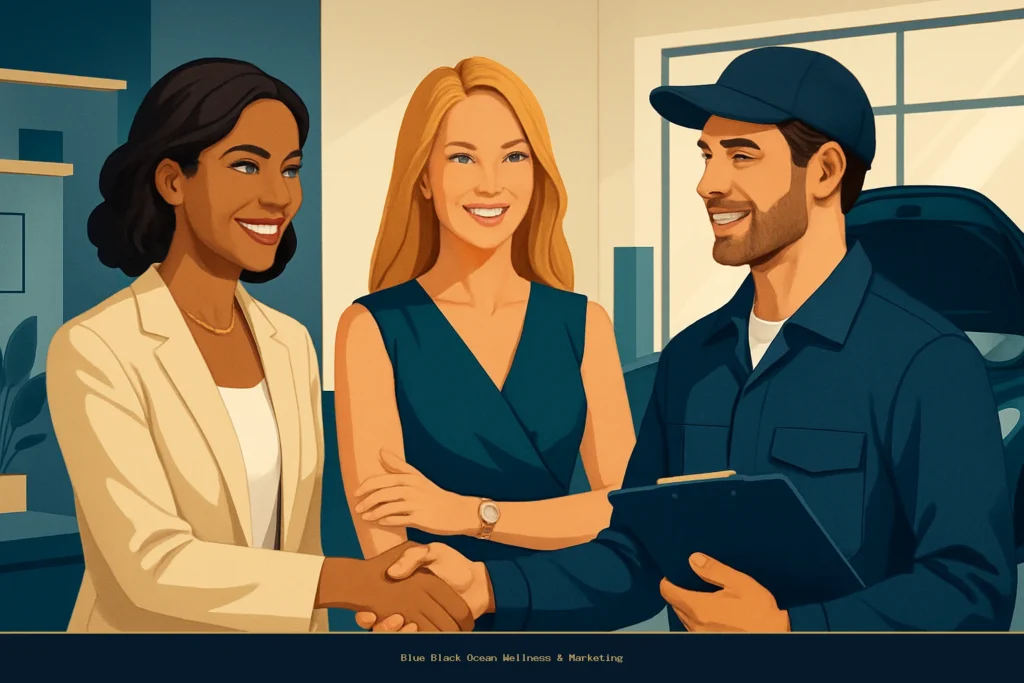
A customer drives out of your shop with a fresh brake job, a fair invoice, and a genuine “thank you.” Three months later, he’s getting his oil changed two miles up the road at a shop he found through a Facebook ad. Nothing went wrong with your repair. The car runs fine. He just never thought about you again until someone else showed up in his feed first.
Table of Contents
- The Uncomfortable Truth
- Why This Keeps Happening
- The Three Layers of a Retention System
- Layer 1: A Position Customers Can Actually Repeat
- Layer 2: Expectations Set at the Counter
- Layer 3: A Follow-Up Process That Doesn’t Depend on Memory
- Key Takeaways
- An Illustrative Industry Scenario
- How Blue Black Ocean Approaches This Problem
- Your Action Plan for This Week
- What to Track Going Forward
- Frequently Asked Questions
- Do I need new software to start a follow-up system?
- What if customers don’t want to be contacted?
- How is this different from just running more ads?
- Will this work if my shop already has a loyal customer base?
This is the quiet leak most independent auto repair shops never diagnose, because it doesn’t look like a problem. Sales are still coming in. The bays are still busy. But the customers filling those bays are increasingly new ones, acquired at real cost, while paid-off, already-trusting past customers drift away without a word of complaint. If you’re spending more on marketing every year but your repeat-visit rate and referral count aren’t moving, this is almost certainly why.
The Uncomfortable Truth
Good repair work does not create loyalty by itself. Customers assume competent work is the baseline, not a reason to come back. What actually decides whether someone returns is whether they remember who you are, understood what you do differently from the shop down the street, and got a nudge at the right moment to book again.
Most shops fail on all three counts, not because owners don’t care, but because retention has never been built as a system. It lives entirely inside the customer’s memory: whether they happen to recall your name when the “Service Engine Soon” light comes on, whether they scroll past your last Facebook post, whether anyone ever calls to ask how the car is running. Memory is not a retention strategy. It’s a gamble, and right now most shops are losing it quietly, one unremembered oil change at a time.
Why This Keeps Happening
- No clear positioning. If your online presence doesn’t say specifically what you’re best at and who you’re best for, a customer has no reason to distinguish you from the next shop that pops up in a search.
- No expectations set at handoff. If a customer isn’t told, in plain terms, what was done and when they should realistically be back, there’s no mental trigger for the next visit.
- No follow-up process. Without a system that reaches out after service, whether a repair went well or a maintenance interval is approaching, the relationship goes cold by default.
The Three Layers of a Retention System
Fixing this isn’t about working harder on repairs. It’s about building three connected layers that don’t depend on anyone’s memory, including your own.
Layer 1: A Position Customers Can Actually Repeat
Your fanpage, website, and business profiles should answer one question instantly: what does this shop do better than the others nearby, and for whom? “We fix cars” is not a position. “We specialize in Japanese imports and give upfront, written pricing before any work starts” is a position, because a customer can repeat it to a friend. If your online presence currently reads like every other shop’s, that’s the first thing to change, before spending another dollar chasing new leads.
Layer 2: Expectations Set at the Counter
The moment you quote a job and the moment you hand back the keys are two of the highest-leverage moments you have. Use them deliberately:
- State exactly what was inspected, repaired, and what wasn’t touched.
- Give a specific, written timeframe for the next visit (mileage or date, not “sometime soon”).
- Tell the customer, out loud, what you’ll do to remind them, so the follow-up doesn’t feel random when it arrives.
Layer 3: A Follow-Up Process That Doesn’t Depend on Memory
This is the layer almost every shop skips, and it’s the one with the most direct payoff. A basic system includes:
- A simple maintenance reminder sent by text at the interval you already quoted the customer.
- A short check-in call or message within a week of any major repair, asking how the vehicle is performing.
- A record, even a basic spreadsheet, tracking which customers have been contacted and which haven’t.
Key Takeaways
- Repeat business is a system outcome, not a byproduct of good repair quality.
- Vague positioning makes you forgettable, even to satisfied customers.
- Expectations set at drop-off and pickup create the mental trigger for the next visit.
- A structured follow-up process converts one-time customers into repeat customers and referral sources.
- None of this requires new staff or software beyond a phone and a spreadsheet to start.
An Illustrative Industry Scenario
Consider a composite example, not a named client, drawn from patterns common across independent shops: a family-run repair shop in a suburban area had a steady stream of walk-ins but a low rate of returning customers. After sharpening its position around Japanese vehicle specialization with transparent, upfront pricing, adding a simple text-based maintenance reminder, and building a clearer services page on its fanpage, the owner began noticing former customers proactively asking about their next maintenance visit instead of quietly disappearing. This scenario illustrates the mechanism, not a guaranteed outcome for every shop.
How Blue Black Ocean Approaches This Problem
Blue Black Ocean starts by diagnosing exactly where the retention leak is occurring: unclear positioning, thin or inconsistent content, or a missing follow-up process. From there, the work is hands-on rather than advisory. That typically includes filming short videos inside the shop so prospective customers can see the actual repair process, maintaining a consistent fanpage posting schedule so the business stays visible between visits, building or improving a website that answers a customer’s questions before they ever call, and helping set up a simple, repeatable maintenance reminder system the front desk can run without extra software.
Your Action Plan for This Week
- Pull a list of the last 20 customers who had a major repair (over $500).
- Check your records to see how many were contacted afterward, either a check-in call or a maintenance reminder.
- Contact everyone who wasn’t by phone or text this week. Ask how the vehicle is running and mention their next likely service interval.
- Assign ownership. Decide now who on your team is responsible for follow-up going forward, so this doesn’t quietly stop again next month.
What to Track Going Forward
Set a simple baseline this month: how many of your last 20 major-repair customers had any documented follow-up. Then track, month over month, how many customers you contact after service and how many return within their quoted interval. Review this monthly alongside your marketing spend. Watching these leading indicators, not just total revenue, is what tells you whether the retention system is actually working.
Frequently Asked Questions
Do I need new software to start a follow-up system?
No. A basic spreadsheet and a phone are enough to start. The point is having a repeatable process, not a particular tool.
What if customers don’t want to be contacted?
Most customers don’t mind a brief, useful check-in tied to their actual vehicle and service history. The key is keeping it specific and short, not promotional.
How is this different from just running more ads?
Advertising brings in new customers at ongoing cost. A retention system keeps customers you’ve already earned, which is typically far less expensive to maintain than continuously replacing lost ones.
Will this work if my shop already has a loyal customer base?
Even loyal customers benefit from clear expectations and reminders. A system simply removes the risk of relying on memory alone, for any customer.
If you’re not sure whether your shop’s real gap is positioning, expectation-setting, or follow-up, that’s worth diagnosing before spending more on ads. Blue Black Ocean offers a Free Marketing Direction Review to help you see exactly where the leak is and what a practical next step looks like, no guarantees attached, just a clear read on where your retention system currently stands.
Trả lời nhanh: Khách sửa xe hài lòng vẫn có thể không quay lại nếu tiệm không có định vị thương hiệu rõ ràng và không chủ động theo dõi sau dịch vụ. Vấn đề không phải chất lượng sửa chữa, mà là thiếu hệ thống giữ khách. Xây định vị rõ, đặt kỳ vọng minh bạch và có quy trình nhắc bảo dưỡng sẽ giải quyết gốc rễ.
Mục lục
Một tiệm sửa xe làm việc đàng hoàng, thợ tay nghề tốt, khách được sửa đúng bệnh với giá hợp lý. Khách cảm ơn, trả tiền, lái xe đi. Ba tháng sau, chính khách đó đổi dầu ở một tiệm khác gần nhà hơn, hoặc vì tình cờ thấy quảng cáo bắt mắt của đối thủ. Chủ tiệm nhìn lại không hiểu vì sao một khách hài lòng lại không quay về.
Đây là tình huống rất nhiều tiệm sửa xe gặp phải, nhưng ít ai gọi đúng tên vấn đề. Không phải khách không hài lòng. Không phải giá quá cao. Vấn đề là tiệm không có gì để khách nhớ đến mình khi nhu cầu tiếp theo xuất hiện.
Sự thật cần nhìn thẳng
Chất lượng sửa chữa là điều kiện cần, không phải điều kiện đủ để giữ khách. Khách hàng nào cũng mong được sửa đúng, sửa nhanh, giá hợp lý. Đó là kỳ vọng tối thiểu, không phải lý do để họ chọn quay lại thay vì thử một tiệm khác.
Điều thật sự giữ khách là hai thứ: họ có nhớ tiệm bạn là ai, khác gì với tiệm khác hay không, và có ai chủ động nhắc họ khi đến lúc cần bảo dưỡng hay không. Phần lớn tiệm sửa xe bỏ trống cả hai.
Hậu quả không đến ngay lập tức nên rất dễ bị bỏ qua. Doanh thu vẫn ổn vì tiệm vẫn có khách mới nhờ vị trí thuận tiện hoặc tìm kiếm ngẫu nhiên. Nhưng chi phí để có một khách mới luôn cao hơn chi phí giữ một khách cũ quay lại. Khi tỷ lệ khách quay lại thấp, tiệm buộc phải chi nhiều hơn cho quảng cáo mỗi năm chỉ để duy trì cùng một lượng công việc, trong khi lợi nhuận biên ngày càng mỏng.
Những điểm chính cần ghi nhớ
- Khách hài lòng không tự động trở thành khách trung thành; sự trung thành cần được xây dựng chủ động.
- Nếu khách không phân biệt được tiệm bạn với ba tiệm khác trong khu vực, họ sẽ chọn theo sự tiện lợi tại thời điểm đó, không phải theo trải nghiệm cũ.
- Việc theo dõi sau dịch vụ không nên phụ thuộc vào trí nhớ của nhân viên hay của khách; nó cần là một quy trình cố định.
- Định vị rõ ràng không có nghĩa là giá rẻ nhất; nó có nghĩa là khách hiểu ngay tiệm mạnh về điều gì và phù hợp với nhu cầu nào của họ.
- Giới thiệu truyền miệng chỉ xảy ra khi khách nhớ đủ rõ để nhắc tên tiệm cho người khác, chứ không chỉ đơn thuần là hài lòng.
Quy trình thực tế để xây dựng hệ thống giữ khách
- Làm rõ định vị trên các kênh online. Xem lại fanpage, website và hồ sơ doanh nghiệp: một khách mới ghé xem trong 30 giây có hiểu ngay tiệm chuyên về gì (xe Nhật, xe Đức, bảo dưỡng định kỳ, sửa chữa nặng) hay không? Nếu câu trả lời là không rõ, đây là điểm cần sửa đầu tiên.
- Chuẩn hóa cách báo giá và giao xe. Khi khách nhận xe, nhân viên nên giải thích ngắn gọn công việc đã làm và gợi ý mốc bảo dưỡng tiếp theo bằng con số cụ thể (số km hoặc số tháng), thay vì chỉ nói chung chung “lần sau nhớ ghé lại”.
- Lập danh sách theo dõi sau dịch vụ. Với mọi ca sửa chữa lớn, ghi lại ngày dự kiến cần bảo dưỡng tiếp theo vào một bảng theo dõi đơn giản, dù bằng phần mềm quản lý tiệm hay bằng bảng tính.
- Chủ động liên hệ đúng thời điểm. Gửi tin nhắn nhắc nhở hoặc gọi điện hỏi thăm ngắn gọn khi đến mốc bảo dưỡng, không chờ khách tự nhớ ra.
- Tạo lý do để khách nhắc đến tiệm với người khác. Có thể là một tấm thẻ nhỏ đưa kèm khi giao xe, một bài đăng dễ chia sẻ, hoặc đơn giản là một trải nghiệm đủ rõ ràng để khách nhớ tên tiệm khi bạn bè hỏi.
Đây là ví dụ minh họa tổng hợp, không phải khách hàng thật: một tiệm sửa xe gia đình ở khu ngoại ô có lượng khách ổn định nhưng tỷ lệ khách quay lại thấp trong nhiều năm. Sau khi làm rõ định vị (chuyên sâu về xe Nhật, minh bạch giá ngay từ báo giá), thêm bước nhắn tin nhắc bảo dưỡng và một trang giới thiệu dịch vụ rõ ràng trên fanpage, chủ tiệm bắt đầu nhận thấy nhiều khách cũ chủ động nhắn hỏi lịch bảo dưỡng tiếp theo thay vì biến mất trong im lặng.
Trước đây, tiệm sửa xe muốn được nhớ đến thường phải dựa vào tờ rơi phát quanh khu, quảng cáo trên báo địa phương hoặc bảng hiệu ngoài trời. Những kênh đó tốn kém và khó biết chính xác ai đã thấy, ai đã nhớ. Ngày nay, mạng xã hội cho phép tiệm tiếp cận đúng nhóm khách trong khu vực, thử nhiều cách truyền tải thông điệp khác nhau, và theo dõi phản hồi rõ ràng hơn nhiều so với trước.
Điều này không có nghĩa là mạng xã hội luôn rẻ hơn hay hiệu quả hơn tờ rơi trong mọi trường hợp. Vấn đề thật sự nằm ở chỗ: công cụ đã dễ tiếp cận hơn, nhưng kết quả chỉ đến khi chiến lược, nội dung, quảng cáo, website và quy trình theo dõi khách được kết nối với nhau một cách có chủ đích, chứ không phải chạy rời rạc từng phần.
Giải pháp Blue Black Ocean đề xuất
Điểm nghẽn phổ biến nhất Blue Black Ocean quan sát thấy ở các tiệm sửa xe là: định vị mờ nhạt trên các kênh online, thiếu nội dung giúp khách hiểu quy trình làm việc trước khi ghé, và không có quy trình theo dõi sau dịch vụ mang tính hệ thống. Ba điểm này cộng lại khiến khách cũ rời đi mà không ai nhận ra cho đến khi doanh thu chững lại.
Blue Black Ocean bắt đầu bằng việc chẩn đoán cụ thể: xem lại fanpage, website và cách tiệm hiện đang giao tiếp với khách sau khi sửa xong, để xác định chính xác điểm nào đang làm rò rỉ khách cũ. Sau đó, Blue Black Ocean trực tiếp triển khai: quay video ngắn tại tiệm để khách thấy được không gian làm việc, quy trình kiểm tra xe, và đội ngũ thật đang phục vụ, giúp tăng sự tin tưởng trước khi khách gọi điện hay ghé trực tiếp không đặt lịch trước.
Song song đó, Blue Black Ocean duy trì đăng nội dung fanpage đều đặn để tiệm luôn hiện diện trong tâm trí khách cũ, đồng thời xây dựng hoặc cải thiện website để khách mới hiểu rõ dịch vụ, giá tham khảo và cách đặt lịch trước khi họ quyết định gọi. Mục tiêu cuối cùng là giúp khách hiểu doanh nghiệp đủ rõ để tự tin đặt lịch hoặc liên hệ, thay vì phải đoán.
FAQ
Làm sao biết tiệm mình đang mất khách cũ mà không nhận ra?
Dấu hiệu rõ nhất là số lượng khách quen quay lại bảo dưỡng định kỳ giảm dần theo thời gian, dù số khách mới vẫn ổn định. Nếu tiệm chưa từng theo dõi việc này một cách có hệ thống, đây chính là lỗ hổng cần lấp trước tiên.
Nhắc bảo dưỡng qua tin nhắn có làm khách cảm thấy bị làm phiền không?
Không, nếu tin nhắn ngắn gọn, đúng thời điểm và mang tính hữu ích thay vì chỉ chào bán dịch vụ. Một tin nhắn nhắc mốc km hoặc mốc thời gian bảo dưỡng thường được khách xem là chăm sóc chu đáo, không phải quảng cáo.
Tiệm nhỏ, ít nhân sự thì có nên tự làm quy trình theo dõi khách không?
Có thể bắt đầu đơn giản bằng một bảng tính ghi ngày sửa chữa và mốc bảo dưỡng tiếp theo cho từng khách. Quan trọng là có ai đó chịu trách nhiệm cập nhật và gửi nhắc nhở đều đặn, dù công cụ đơn giản hay phức tạp.
Nếu tiệm của bạn đang gặp đúng tình huống này, khách hài lòng nhưng không quay lại, đây là lúc cần nhìn lại định vị thương hiệu và quy trình chăm sóc sau dịch vụ một cách nghiêm túc. Hãy đăng ký một buổi Free Marketing Direction Review với Blue Black Ocean qua trang Contact để cùng xác định chính xác điểm nghẽn đang khiến tiệm mất khách cũ, không cam kết kết quả trước, chỉ là một buổi trao đổi thẳng thắn về hiện trạng và hướng đi phù hợp.



[…] Why Satisfied Auto Repair Customers Still Don’t Come Back […]
[…] Why Satisfied Auto Repair Customers Still Don’t Come Back […]