
Why Springfield Customers Skip Your Coffee Shop Before They Ever Walk InVì Sao Khách Springfield Tìm Thấy Quán Cà Phê Của Bạn Nhưng Không Đến

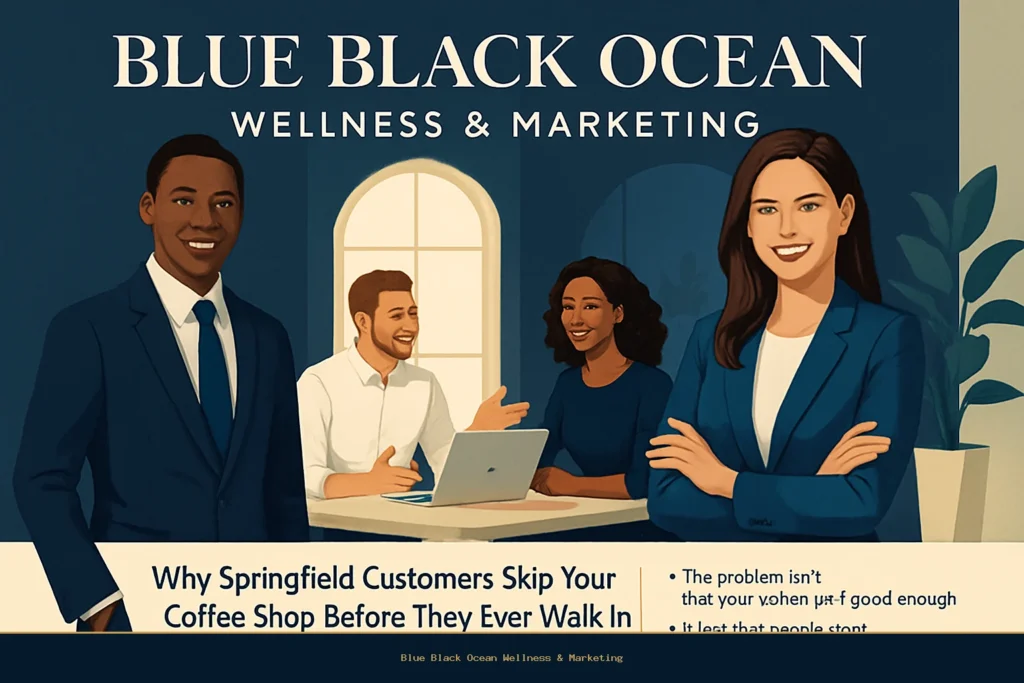
A Springfield resident is fifteen minutes from a work call and needs coffee. They pull out their phone, search “coffee near me,” and land on your Google listing or Facebook page. The photos are from two seasons ago. There’s no menu they can actually read. The last post is from a month ago. They hesitate for about four seconds, then tap on the chain they already know will have a clear menu and a predictable experience. They never called you a bad coffee shop. They just never became a customer, and you never found out why.
That moment repeats every day in local markets like Springfield, and it rarely shows up as a complaint or a bad review. It shows up as nothing at all: a search that ends somewhere else. This is the quiet cost of an online presence that hasn’t been updated to match what’s actually happening in your shop this week.
The Uncomfortable Truth
The problem isn’t that your coffee isn’t good enough, and it isn’t that people don’t know your shop exists. The uncomfortable truth is this: customers are making a decision before they ever arrive, using whatever information they can find in under sixty seconds, and most coffee shops treat their online presence as something they set up once and leave alone. A profile built a year ago and never revisited is not a neutral asset. It’s actively sending outdated signals to people who are ready to spend money right now.
Local customers aren’t comparing your coffee to the chain’s coffee. They’re comparing your clarity to the chain’s clarity. Whoever answers “what do you serve, what’s it like inside, and how do I order” the fastest wins the visit, regardless of which shop actually makes the better drink.
Why This Keeps Happening
Most coffee shop owners are running the register, managing staff, and ordering inventory. Updating a Facebook page or a Google Business Profile gets pushed to “when things slow down,” which rarely arrives. Meanwhile, the digital listing keeps existing, keeps showing up in searches, and keeps making a first impression on the owner’s behalf, whether or not that impression is accurate.
The root issue is a mismatch between how customers research (fast, visual, recent) and how most shops maintain their online presence (occasional, reactive, outdated). Fixing this doesn’t require a bigger marketing budget. It requires a repeatable rhythm.
Key Takeaways
- Lost visits are invisible. A hesitant searcher who chooses a competitor never appears in your reviews or complaints; they simply don’t show up, so the problem stays hidden from the owner.
- Clarity beats quality in the decision moment. Before a first visit, customers reward whoever answers their questions fastest, not necessarily whoever has the best product.
- This is a maintenance problem, not a one-time setup problem. A profile built once and never revisited will eventually work against you as menus, hours, and seasonal offerings change.
- Small, consistent updates outperform occasional big pushes. A steady weekly rhythm of real content builds more trust than a rare, polished campaign.
A Practical Weekly System for Staying Current
Instead of an occasional overhaul, build a lightweight routine that one person can own and repeat.
Step 1: Audit What a First-Time Searcher Actually Sees
- Search your own shop on Google and on Facebook/Instagram exactly as a stranger would.
- Note every place where the menu, hours, or seasonal items look outdated, incomplete, or unclear.
- Check whether your website (if you have one) answers what you serve, what the space feels like, and how to order.
Step 2: Fix the Most Visible Gaps First
- Replace the single most outdated menu photo before anything else.
- Confirm hours are accurate across every platform, not just one.
- Add or update seasonal drinks so the profile reflects this week, not last quarter.
Step 3: Establish a Simple Weekly Content Rhythm
- Post real drinks, real seasonal items, and real in-store atmosphere on a consistent schedule.
- Prioritize proof-of-life content over polished promotional graphics; customers trust what looks current and real.
- Rotate who owns this task if the primary owner is busy during peak hours.
Step 4: Review Monthly, Not Yearly
- Look for qualitative signals: are more first-time customers mentioning they found you online or saw a recent post?
- Note which content (menu shots, seasonal items, in-store moments) seems to generate the most comments or messages.
- Adjust the following month’s content based on what actually got attention, not what you assumed would.
An Industry Scenario Worth Recognizing
Consider a coffee shop with a loyal in-person customer base but a digital presence that hadn’t kept pace: outdated menu photos, an inconsistent posting schedule, and a website that didn’t clearly show what was actually being served. A first-time searcher had no fast way to build confidence before deciding to visit. This is the exact pattern Blue Black Ocean has addressed in field work, most notably with Teaology Boba & Cafe, where on-site video was recorded, fanpage content was published on a consistent schedule, and the website was built out so customers could understand the drink and food menu, ordering options, and in-store experience before ever walking in. The observable shift was in clarity and consistency: a more complete, more current presence that gave hesitant searchers a real reason to choose the shop instead of defaulting elsewhere.
How Blue Black Ocean Approaches This Problem
Blue Black Ocean starts by diagnosing exactly where the pre-visit information gap lives, whether that’s the Google Business Profile, the social feed, or the website. From there, the priority is capturing what’s actually true about the shop right now: real video on location showing the product and the atmosphere, not stock imagery or outdated photos. That content gets published on a consistent cadence so the presence stays current instead of going stale again within weeks. Where a website exists or is needed, it gets built or improved so a hesitant searcher can answer their own questions, menu, ordering process, in-store feel, before they ever decide to visit. This isn’t a claim that social content is automatically cheaper or more effective than flyers or local signage; it’s a recognition that digital presence offers more flexible targeting and clearer feedback, provided the strategy, content, targeting, website, and follow-up are actually connected to one another.
What to Do This Week
- Assign one person (owner or staff) to search the shop on Google and Facebook/Instagram exactly as a new customer would.
- Write down every outdated or unclear element: menu photos, hours, seasonal items, missing website answers.
- Update the single most outdated menu photo or post first, before attempting a full overhaul.
- Set a recurring weekly reminder to post one piece of real, current content, a drink, a seasonal item, or an in-store moment.
- Revisit the list monthly and note which updates seem to correlate with new customers mentioning they found the shop online.
Frequently Asked Questions
How do I know if my coffee shop actually has this problem?
Search your own shop the way a stranger would, on your phone, using Google and Facebook or Instagram. If you can’t tell what’s currently on the menu, what the space feels like, or whether the hours are accurate within thirty seconds, a hesitant customer can’t either.
Do I need a full website redesign to fix this?
Not necessarily. Some shops only need updated menu photos and a consistent posting habit. Others need a website that clearly answers what’s served, how to order, and what the space feels like. The right starting point depends on where the biggest gap actually is, which is why an audit comes first.
Is posting on social media more effective than local flyers or signage?
Neither format is automatically better. Social presence offers more flexible targeting and easier feedback tracking, but results depend on whether the content, targeting, website, and follow-up are working together. Print and local signage still have a place in a Springfield-style market.
How often should I actually update my online presence?
Weekly, not yearly. A short, consistent rhythm of real content, real drinks, real seasonal items, real atmosphere, builds more trust over time than an occasional big campaign.
Your Next Step
If you’re not sure whether your shop’s online presence is helping or quietly costing you first-time visits, that’s exactly the kind of question a short outside look can answer. Blue Black Ocean offers a Free Marketing Direction Review to help Springfield coffee shop owners see, clearly and without pressure, where the pre-visit information gap actually is and what a realistic next step looks like.
Trả lời nhanh: Khách ở Springfield thường tìm quán cà phê trên điện thoại trước khi rời nhà, và họ quyết định trong chưa đầy một phút dựa trên hình ảnh menu, bài đăng gần nhất và cảm giác không gian quán. Nếu thông tin đó cũ hoặc thiếu, khách bỏ qua quán bạn mà không để lại review, không phàn nàn, chỉ đơn giản là không đến.
Đây không phải vấn đề về chất lượng cà phê. Đây là vấn đề về việc khách chưa đủ tin tưởng để bước vào trước khi họ thấy tận mắt sản phẩm.
Sự thật cần nhìn thẳng
Một khách ở Springfield đang tìm nơi uống cà phê trước cuộc họp làm việc. Họ mở điện thoại, tìm thấy trang Facebook hoặc hồ sơ Google của quán bạn, nhưng ảnh menu đã cũ, không thấy món theo mùa, không có bài đăng nào trong vài tuần gần nhất cho biết quán đang bán gì. Họ lưỡng lự vài giây, rồi quay sang chuỗi cà phê quen thuộc mà họ đã biết chắc sẽ có gì.
Đó là khoảnh khắc quyết định thật sự. Không phải lúc khách bước vào quán, mà là lúc họ đang cầm điện thoại và cân nhắc có nên đến hay không.
Điều đáng lo là chuyện này không hiện ra ở đâu cả. Không có review tiêu cực, không có khách phàn nàn trực tiếp. Người chủ quán chỉ thấy lượng khách mới không tăng, mà không biết nguyên nhân nằm ở chỗ nào. Đây là dạng mất khách âm thầm nhất: mất trước khi khách kịp trở thành một con số để bạn nhìn thấy.
Nguyên nhân gốc thường không phải vì quán thiếu sản phẩm tốt. Nguyên nhân là vì hồ sơ mạng xã hội, hồ sơ doanh nghiệp trên Google, hoặc website (nếu có) đang cho khách thấy thông tin lỗi thời hoặc không rõ ràng: ảnh menu cũ, không có bài đăng gần đây chứng minh quán vẫn hoạt động bình thường, không nói rõ menu theo mùa, không cho khách hình dung được không gian bên trong. Khách lần đầu không có đủ căn cứ để tin tưởng nhanh, nên họ chọn quán nào có thông tin rõ ràng và mới nhất, dù sản phẩm ở đó chưa chắc ngon hơn.
Những điểm chính cần ghi nhớ
- Khách quyết định trước khi đến, không phải sau khi bước vào quán.
- Thông tin cũ hoặc thiếu khiến khách chọn quán khác mà không để lại dấu hiệu gì để bạn biết.
- Vấn đề nằm ở sự rõ ràng và tính cập nhật, không nằm ở chất lượng cà phê.
- Ba câu hỏi khách lần đầu cần được trả lời trong dưới một phút: quán bán gì, không gian như thế nào, và làm sao để đặt món hoặc tìm đến.
- Đây là việc cần duy trì thường xuyên, không phải làm một lần rồi để đó.
Quy trình kiểm tra thực tế cho quán cà phê
- Tự tìm quán mình như một khách lạ. Mở điện thoại, tìm quán trên Google và Facebook/Instagram giống cách một khách mới sẽ làm.
- Ghi lại mọi điểm mơ hồ. Ảnh menu có cũ không? Có món nào đã ngừng bán nhưng vẫn còn hiển thị không? Giờ mở cửa có đúng không?
- Sửa điểm lỗi thời nhất trước. Không cần làm lại toàn bộ, chỉ cần cập nhật một tấm ảnh menu hoặc một bài đăng đang sai lệch nhất.
- Thiết lập lịch đăng bài đơn giản mỗi tuần. Cho khách thấy món đang bán thật, món theo mùa, và không khí thật trong quán.
- Đảm bảo website hoặc hồ sơ trả lời được ba câu hỏi cốt lõi. Quán bán gì, cảm giác bên trong thế nào, và cách đặt món hoặc liên hệ.
- Xem lại mỗi tháng. Thay đổi nào khiến khách mới nói rằng họ biết quán qua mạng.
Trước đây, quán cà phê thường phải dựa vào tờ rơi, báo in địa phương hoặc bảng quảng cáo ngoài trời để có người biết đến. Ngày nay, mạng xã hội cho phép quán tiếp cận đúng nhóm khách quanh khu vực, thử nghiệm nội dung khác nhau và theo dõi phản hồi với chi phí linh hoạt hơn. Nhưng điều đó không có nghĩa mạng xã hội luôn rẻ hơn hoặc luôn hiệu quả hơn trong mọi trường hợp. Kết quả chỉ đến khi chiến lược, nội dung, quảng cáo, website và quy trình theo dõi được kết nối đúng với nhau, không phải chỉ vì có mặt trên mạng xã hội.
Câu hỏi thường gặp
Quán tôi có review tốt, vậy tại sao vẫn cần lo về thông tin trước khi đến?
Review tốt giúp khách tin vào chất lượng, nhưng không thay thế được thông tin cụ thể như menu hiện tại, không gian, hoặc món theo mùa. Khách vẫn cần xác nhận nhanh trước khi quyết định đến, đặc biệt với khách lần đầu chưa từng nghe đến quán.
Tôi nên đăng bài bao nhiêu lần một tuần là đủ?
Không có con số cố định cho mọi quán. Điều quan trọng hơn số lượng là tính đều đặn và tính cập nhật: khách cần thấy quán đang hoạt động, có món mới, có không khí thật, chứ không cần thấy quá nhiều bài đăng.
Làm sao biết vấn đề nằm ở thông tin trước khi đến, chứ không phải ở sản phẩm?
Hãy tự trải nghiệm như một khách lạ: tìm quán trên điện thoại, xem thử bạn có đủ thông tin để tự tin bước vào không. Nếu bạn còn lưỡng lự, khách mới cũng sẽ lưỡng lự như vậy.
Giải pháp Blue Black Ocean đề xuất
Điểm nghẽn phổ biến ở các quán cà phê tại Springfield không phải là thiếu khách quan tâm, mà là khách tìm thấy quán nhưng không đủ thông tin để tự tin quyết định đến. Blue Black Ocean bắt đầu bằng việc chẩn đoán chính xác điểm nghẽn đó: hồ sơ Google, trang mạng xã hội, hoặc website đang thiếu thông tin gì khiến khách lần đầu do dự.
Sau khi xác định điểm nghẽn, Blue Black Ocean quay video trực tiếp tại quán để ghi lại sản phẩm thật, không khí thật, và cách phục vụ thật, thay vì dùng hình ảnh chung chung. Nội dung này được đăng lên fanpage theo lịch đều đặn, giúp trang luôn cập nhật và đáng tin, thay vì để khách thấy bài đăng cũ từ nhiều tháng trước.
Song song đó, Blue Black Ocean xây dựng hoặc cải thiện website để khách có thể hiểu rõ menu đồ uống và món ăn, cách đặt món, hoạt động của quán, và cảm giác không gian bên trong, tất cả trước khi họ quyết định đến. Đây chính là cách Blue Black Ocean đã triển khai cho Teaology Boba & Cafe: quay video tại quán, đăng nội dung fanpage đều đặn, và xây dựng website để khách hiểu rõ quán trước khi ghé. Kết quả quan sát được là sự rõ ràng hơn trong thông tin, tính đều đặn hơn trong nội dung, và một hiện diện số hoàn chỉnh hơn, không phải là số liệu tăng trưởng cụ thể.
Nếu bạn muốn biết chính xác điểm nào trong hồ sơ hoặc website quán mình đang khiến khách lần đầu do dự, hãy liên hệ với Blue Black Ocean để đặt một buổi Free Marketing Direction Review. Không có gì được đảm bảo trước, chỉ có một cái nhìn rõ ràng hơn về nơi cần bắt đầu. Truy cập trang Contact để đặt lịch trao đổi.


[…] about where to eat often begins before anyone reaches the table. This practical perspective on why Springfield Customers Skip Your Coffee Shop Before They Ever Walk In adds useful context for diners and local restaurants thinking about a smoother experience from […]
[…] often begins with the information customers find before they arrive. This practical perspective on why Springfield Customers Skip Your Coffee Shop Before They Ever Walk In adds useful context for making that path from online discovery to ordering feel […]
[…] Why Springfield Customers Skip Your Coffee Shop Before They Ever Walk In […]