
Your Dental Practice Isn’t Losing Patients to Competitors. It’s Losing Them to Voicemail.Vì Sao Ghế Nha Sĩ Vẫn Trống Dù Điện Thoại Không Ngừng Reo

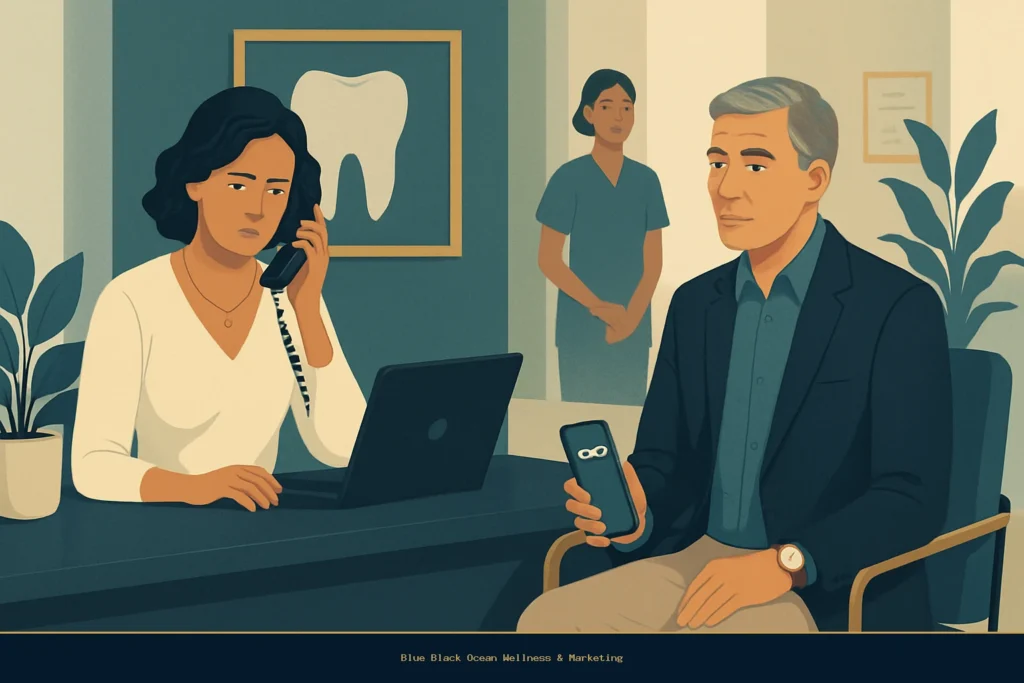
It’s 10:40 a.m. on a Tuesday. A new patient is scrolling through your practice’s Facebook page after seeing an ad for teeth whitening. She sends a Messenger question about pricing and availability. Meanwhile, the phone rings twice at the front desk, but your receptionist is mid-checkout with another patient and can’t grab it. The call goes to voicemail. Forty minutes later, someone finally checks Messenger and calls back. But the prospective patient already booked with the practice two exits down the highway. Nobody did anything wrong. The ad worked, the phone worked, the front desk was doing real work with a real patient in the chair. The system just didn’t have a way to catch what fell through the middle.
Table of Contents
- The Uncomfortable Truth
- Key Takeaways
- Why This Keeps Happening
- Industry Scenario (Composite Illustration)
- A Practical Process to Fix the Gap
- Choosing What to Fix First
- How Blue Black Ocean Approaches This
- Your Action Plan for This Week
- Frequently Asked Questions
- How do I know if my practice has a booking gap problem?
- Do I need new software to fix this?
- Will a waitlist actually help with last-minute cancellations?
- How fast should my practice respond to a new inquiry?
- What to Do Next
This is the actual problem costing dental practices booked chairs, and it has almost nothing to do with how much you spend on marketing. It’s what happens, or doesn’t happen, in the gap between “someone is interested” and “someone has a confirmed, protected appointment on the schedule.”
The Uncomfortable Truth
Most practices assume a slow month means not enough leads. Usually that’s wrong. The truth is less comfortable: your practice is likely generating enough calls, messages, and web form submissions every week. The failure is in how those inquiries get captured, prioritized, and converted into a held appointment slot. Marketing is doing its job. Operations doesn’t have a system built to catch what marketing hands over.
Every channel, phone, Messenger, web form, walk-in, exists in its own silo. There’s no single person or process responsible for making sure every inquiry gets a timely answer. There’s no waitlist to fill a slot the moment someone cancels. There’s no two-way confirmation to keep tomorrow’s 9 a.m. appointment from becoming a no-show. The result: open chairs during your best hours, a backlog in the afternoon, and marketing dollars spent generating interest that quietly evaporates before it ever becomes revenue.
Key Takeaways
- The leak is at the handoff. Patients aren’t disappearing because of weak marketing; they’re disappearing between “inquiry received” and “appointment confirmed.”
- Fragmented channels create blind spots. When calls, Messenger, and web forms aren’t unified, someone always falls through.
- No-shows are a process problem, not a patient problem. Without a confirmation and reminder sequence, empty chairs are predictable, not random.
- A waitlist turns cancellations into recovered revenue instead of a wasted hour on the schedule.
- Response speed is a competitive advantage. The first practice to answer usually wins the appointment, not the practice with the better ad.
Why This Keeps Happening

The root cause isn’t a staffing shortage, and hiring another receptionist rarely solves it on its own. The real issue is that marketing and operations aren’t speaking the same language. Your marketing efforts (ads, SEO, social content) are built to generate inquiries. But there’s no clear internal process for what happens the moment an inquiry lands: who owns it, how fast it needs a response, and what happens if that first response doesn’t turn into a booked visit.
Without a defined intake process, every channel becomes its own dead end. A Messenger question sits unanswered for hours because nobody “owns” Messenger the way the front desk owns the phone. A web form submission goes to an inbox nobody checks between patients. Meanwhile, appointment reminders, if they exist at all, are inconsistent, which quietly drives up no-shows and last-minute cancellations.
Industry Scenario (Composite Illustration)
Consider a composite example built from patterns common across mid-sized dental practices, not a real client case. A practice in a mid-size city receives several dozen inquiries a week spread across phone calls, Messenger, and a website contact form. There is no single point of intake and no shared response standard. The predictable result: morning hours sit open because early inquiries go unanswered until midday, while afternoons become overbooked as staff try to squeeze in everyone who did connect. No single mistake causes this. The absence of one coordinated intake process does.
A Practical Process to Fix the Gap
Building a working demand-to-appointment process doesn’t require new advertising spend. It requires ordering what’s already coming in. Here is a sequence a practice can implement without overhauling its entire operation:
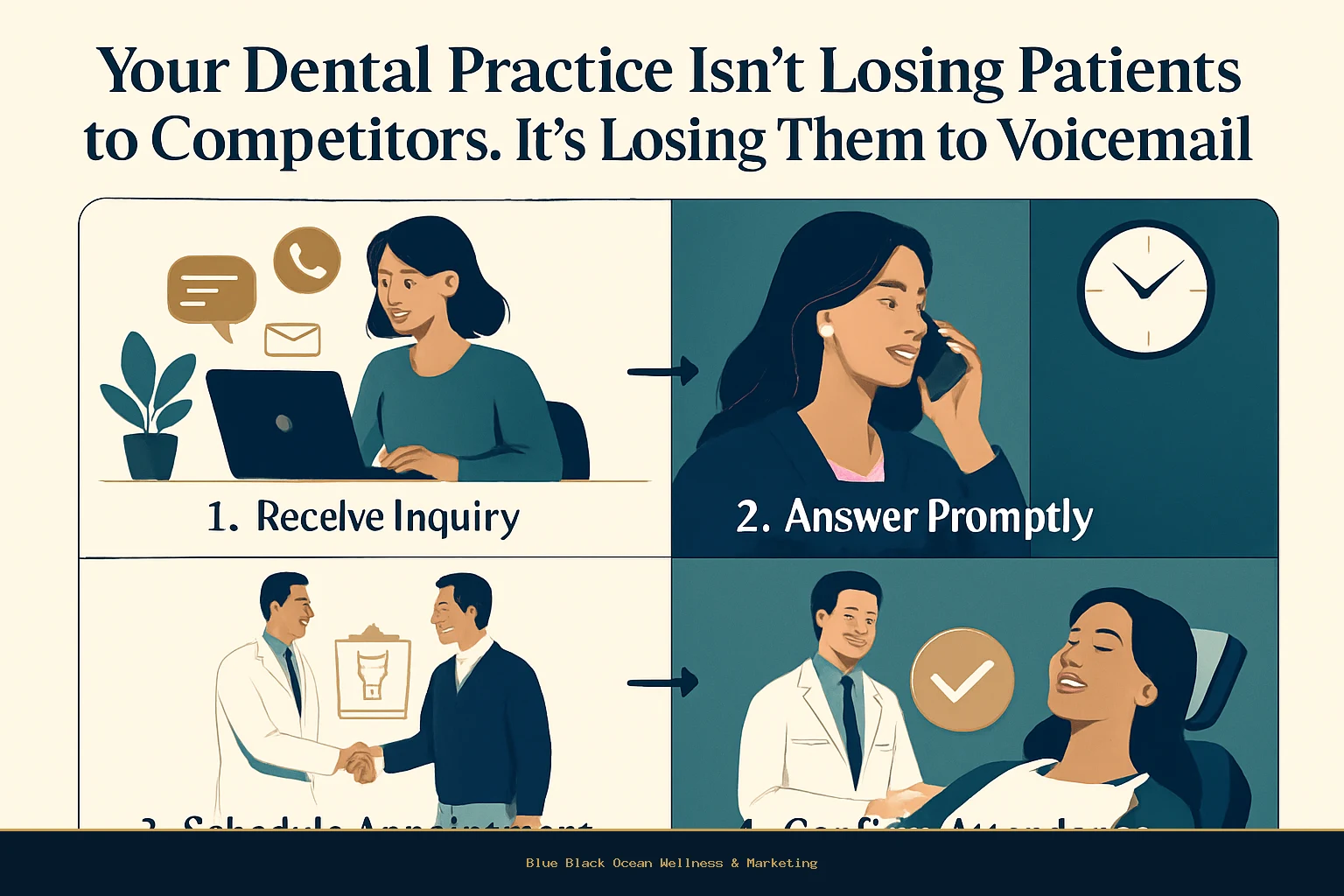
- Consolidate every inquiry channel. Route phone, Messenger, and web form submissions to one person or a small team responsible for first response, regardless of how the inquiry arrived.
- Set a clear response-time standard. A reasonable target is a first response within 15 to 30 minutes during business hours. Write it down so it isn’t left to memory or mood.
- Build an active waitlist. When a cancellation opens a slot, someone should be able to fill it within minutes, not leave it open until the next scheduled patient.
- Confirm appointments two ways. Send a confirmation message when the appointment is booked, then a reminder 24 to 48 hours before the visit. This single habit tends to reduce avoidable no-shows.
- Prioritize by appointment type. Sort inquiries into categories like urgent care, routine cleanings, and cosmetic consultations so your schedule reflects which slots need flexibility and which can be booked further out.
Choosing What to Fix First
Not every practice needs to fix all five steps simultaneously. If your front desk is drowning in calls during patient checkout, consolidating intake matters most. If cancellations are common but slots stay empty, the waitlist is your priority. If patients book but don’t show, confirmation and reminders come first. Diagnose before you build; don’t guess.
How Blue Black Ocean Approaches This

Blue Black Ocean starts by diagnosing exactly where the leak happens in the journey from inquiry to kept appointment: which contact channels are being missed, what the average first-response time actually is, and where the handoff between marketing and the front desk breaks down. From there, Blue Black Ocean produces short videos filmed inside the practice so prospective patients can see the space, the process, and the team before they ever walk in, which tends to ease first-visit anxiety and support better schedule retention. Blue Black Ocean also maintains consistent fanpage content to keep the practice visible and trustworthy between visits, and builds or improves the practice website so booking forms are clear and insurance or payment information is easy to find, reducing the number of back-and-forth calls needed just to confirm a booking.
Your Action Plan for This Week
Before changing any process, get a baseline. This week, do one specific thing:
- List every channel a patient could use to contact your practice (phone, Messenger, web form, and any messaging apps you use).
- For five business days, track how long it takes to give a first response to each inquiry, and how many inquiries received no response at all that day.
- Owner: assign one team member to track this, even if it’s a simple notebook or spreadsheet.
- Signal to review: average response time and number of unanswered inquiries per day. These two numbers tell you where the leak actually is.
Once you have that baseline, revisit it monthly. Leading indicators to watch include response time and unanswered inquiries; business outcomes to observe over time include fewer open morning slots and fewer last-minute cancellations. No specific percentage or revenue figure should be assumed before you’ve measured your own numbers.
Frequently Asked Questions
How do I know if my practice has a booking gap problem?
If your front desk feels busy but your schedule still has open slots during peak hours, or if patients say they called and didn’t hear back quickly, that’s a signal worth tracking with the baseline exercise above.
Do I need new software to fix this?
Not necessarily. Many practices can improve response time and reduce no-shows with clearer internal ownership and a simple confirmation habit before investing in new booking software.
Will a waitlist actually help with last-minute cancellations?
A waitlist gives you a way to fill a canceled slot quickly instead of leaving it empty until the next scheduled patient. It won’t eliminate cancellations, but it can reduce the chair time lost to them.
How fast should my practice respond to a new inquiry?
A reasonable working target is 15 to 30 minutes during business hours. The exact number matters less than having a defined standard your team is actually following.
What to Do Next
If your practice is generating interest but struggling to turn it into a full, protected schedule, the fix usually isn’t more advertising. It’s a clearer process for what happens the moment someone reaches out. If you’d like a second set of eyes on where your specific booking gap is happening, Blue Black Ocean offers a Free Marketing Direction Review to look at your current intake process and identify where inquiries are most likely slipping through.
Trả lời nhanh: Ghế nha sĩ trống không phải vì thiếu khách quan tâm, mà vì khoảng trống giữa lúc khách gọi/nhắn/đặt lịch online và lúc lịch hẹn được xác nhận thật sự. Giải pháp là xây một quy trình tiếp nhận và xếp lịch tập trung, có thứ tự ưu tiên, thay vì tiếp tục đổ thêm ngân sách quảng cáo vào phần đầu phễu.
Mục lục
Một phòng khám nha khoa đang chạy quảng cáo, có fanpage hoạt động đều, khách hàng tiềm năng gọi điện hoặc nhắn Messenger hỏi lịch trám răng, tẩy trắng, hay khám định kỳ. Nhưng lễ tân đang bận tiếp bệnh nhân tại quầy, cuộc gọi rơi vào voicemail, tin nhắn nằm chờ vài tiếng mới có người trả lời. Đến lúc gọi lại, khách đã đặt lịch ở phòng khám khác rồi.
Đây là tình huống rất quen thuộc nhưng ít khi được nhìn đúng gốc rễ. Chủ phòng khám thường nghĩ vấn đề là “cần thêm quảng cáo để có nhiều lượt hỏi hơn”. Nhưng thực ra vấn đề nằm ở khâu giữa: biến lượt hỏi thành lịch hẹn giữ được.
Sự thật cần nhìn thẳng
Marketing tạo ra lượt quan tâm. Vận hành biến lượt quan tâm thành lịch hẹn thật. Nếu hai bên không nói cùng một ngôn ngữ, tiền quảng cáo và công sức làm nội dung sẽ rò rỉ ngay ở khâu cuối cùng, nơi quan trọng nhất.
Phòng khám không thiếu nhu cầu. Cái thiếu là một điểm tiếp nhận thống nhất cho mọi kênh liên hệ, một mốc thời gian phản hồi rõ ràng, và một cách xử lý khi có hủy lịch hoặc trống giờ. Khi ba thứ này không tồn tại, kết quả luôn giống nhau: giờ vàng buổi sáng hoặc cuối tuần bị bỏ trống, trong khi buổi chiều lại dồn lịch đến mức bác sĩ và trợ lý không kịp trở tay.
No-show cũng không tự nhiên mà có. No-show tăng khi không có quy trình xác nhận và nhắc hẹn hai chiều. Khách đặt lịch xong rồi quên, vì không ai nhắc lại trước 24 đến 48 giờ. Đây không phải lỗi của khách, mà là lỗ hổng trong quy trình.
Nguyên nhân gốc nằm ở đâu
Gốc rễ không phải do thiếu người trực điện thoại. Gốc rễ là marketing và vận hành đang hoạt động như hai bộ phận tách rời. Đội làm nội dung, quảng cáo tạo ra lượt hỏi từ nhiều kênh: điện thoại, Messenger, form đặt lịch trên website, thậm chí walk-in. Nhưng không có quy trình bàn giao rõ ràng để những lượt hỏi này được xử lý đúng người, đúng lúc, đúng thứ tự ưu tiên.
Không có SLA thời gian phản hồi. Không có waitlist để lấp chỗ trống khi có khách hủy lịch phút chót. Không có cách phân loại: đâu là ca cấp cứu cần ưu tiên, đâu là khám định kỳ có thể linh hoạt giờ. Kết quả là năng lực tiếp nhận thực tế của phòng khám (số ghế, số bác sĩ, khung giờ trống) không bao giờ được sử dụng hết công suất.
Giải pháp thực tế: xây quy trình đặt lịch có thứ tự ưu tiên
Thay vì tìm thêm kênh quảng cáo mới, phòng khám nên tập trung dựng lại quy trình tiếp nhận và xếp lịch. Đây là năm bước cốt lõi:
- Gom kênh liên hệ về một mối. Dù khách gọi, nhắn Messenger, hay điền form trên website, tất cả phải đổ về một điểm xử lý duy nhất hoặc một người/nhóm chịu trách nhiệm chính. Tránh tình trạng mỗi kênh một người quản lý riêng lẻ, không ai nắm toàn cảnh.
- Đặt SLA phản hồi rõ ràng. Ví dụ: phản hồi trong 15 đến 30 phút trong giờ hành chính. Nếu không làm được ngay, ít nhất cần một tin nhắn tự động xác nhận đã nhận được yêu cầu và sẽ liên hệ lại trong khung giờ cụ thể.
- Xây waitlist chủ động. Khi có khách hủy lịch, đừng để ghế trống. Có sẵn danh sách chờ để gọi lấp chỗ ngay, thay vì để trống giờ đó.
- Xác nhận lịch hai chiều. Gửi tin nhắn xác nhận ngay khi đặt lịch, và nhắc lại trước 24 đến 48 giờ. Đây là cách đơn giản nhất để giảm no-show mà không cần công cụ phức tạp.
- Phân loại ưu tiên theo loại dịch vụ. Ca cấp cứu, khám định kỳ, và dịch vụ thẩm mỹ có mức độ linh hoạt khác nhau. Sắp xếp đúng loại vào đúng khung giờ giúp tối ưu năng lực bác sĩ.
Ví dụ minh họa (tình huống tổng hợp, không phải case study thật): Hình dung một phòng nha ở một thành phố cỡ vừa, mỗi tuần nhận vài chục lượt liên hệ qua điện thoại, Messenger, và form website. Vì không có quy trình gom về một mối, giờ trống buổi sáng cứ lặp lại trong khi buổi chiều luôn kín lịch đến mức căng thẳng. Khi phòng khám dựng lại quy trình tiếp nhận tập trung và thêm waitlist, giờ trống buổi sáng bắt đầu có khách lấp vào, và số lượt hỏi bị bỏ sót giảm rõ rệt, dù chưa cần đổi bất kỳ chiến dịch quảng cáo nào.
Vai trò của Blue Black Ocean trong việc tháo gỡ điểm nghẽn này

Blue Black Ocean tiếp cận vấn đề này bằng cách chẩn đoán trước, không vội thêm quảng cáo. Chúng tôi xem xét kênh liên hệ nào đang bị bỏ sót nhiều nhất, thời gian phản hồi trung bình đang là bao lâu, và điểm bàn giao giữa marketing với lễ tân/vận hành đang bị đứt ở đâu.
Sau khi xác định điểm nghẽn, Blue Black Ocean quay video ngắn tại phòng khám để khách hàng tiềm năng thấy được không gian, quy trình khám, và đội ngũ trước khi họ quyết định đặt lịch. Điều này giúp giảm lo lắng tự nhiên trước lần khám đầu tiên và tăng khả năng khách giữ đúng lịch đã đặt.
Song song đó, Blue Black Ocean đăng nội dung fanpage đều đặn để duy trì sự hiện diện đáng tin cậy, giúp khách quen dần với phòng khám trước khi họ cần đặt lịch. Chúng tôi cũng xây dựng hoặc cải thiện website để có form đặt lịch rõ ràng, thông tin bảo hiểm và thanh toán dễ tìm, giúp khách tự tin đặt lịch ngay mà không cần gọi đi gọi lại nhiều lần để hỏi những câu cơ bản.
Những điểm chính cần ghi nhớ
- Ghế trống thường không phải vì thiếu nhu cầu, mà vì lượt hỏi không được chuyển hóa thành lịch hẹn đúng lúc.
- No-show giảm rõ rệt khi có xác nhận và nhắc hẹn hai chiều, không cần công cụ phức tạp.
- Waitlist chủ động là cách rẻ nhất để lấp chỗ trống khi có hủy lịch phút chót.
- Marketing và vận hành cần một điểm bàn giao rõ ràng, nếu không ngân sách quảng cáo sẽ rò rỉ ở khâu cuối.
- Đo lường trước khi thay đổi: biết chính xác mình đang mất bao nhiêu lượt hỏi và mất ở đâu.
Checklist thực tế cho tuần này
- Liệt kê tất cả kênh khách có thể liên hệ: điện thoại, Messenger, form web, Zalo (nếu có).
- Trong 5 ngày làm việc, ghi lại thời gian phản hồi đầu tiên cho mỗi lượt liên hệ.
- Đếm số lượt không được phản hồi trong ngày hôm đó.
- Xác định ai đang là người chịu trách nhiệm chính khi có nhiều kênh cùng lúc.
- Kiểm tra xem phòng khám đã có waitlist khi hủy lịch chưa, nếu chưa thì bắt đầu ghi danh sách chờ đơn giản trên giấy hoặc bảng tính.
Câu hỏi thường gặp

Phòng khám nhỏ, chỉ có 1-2 bác sĩ, có cần quy trình phức tạp này không?
Không cần phức tạp. Ngay cả một bảng tính đơn giản ghi lại giờ trống, waitlist, và thời gian phản hồi cũng đã tạo ra khác biệt rõ rệt so với việc không có gì.
Làm sao biết mình đang mất lượt hỏi ở kênh nào?
Bắt đầu bằng cách đo baseline: theo dõi trong một tuần, mỗi kênh liên hệ mất bao lâu để có phản hồi đầu tiên. Đây là bước đầu tiên trước khi thay đổi bất cứ điều gì.
Video quay tại phòng khám có giúp giảm no-show không?
Video giúp khách hiểu quy trình và không gian trước khi đến, từ đó giảm lo lắng và tăng khả năng khách giữ đúng lịch đã đặt. Đây là yếu tố hỗ trợ, không thay thế được quy trình xác nhận và nhắc hẹn.
Nên bắt đầu từ đâu nếu chưa có quy trình gì cả?
Bắt đầu từ việc đo lường baseline trong tuần này, sau đó chọn một điểm nghẽn rõ nhất (thường là thời gian phản hồi hoặc thiếu waitlist) để xử lý trước.
Nếu phòng khám của bạn đang gặp đúng tình huống này, ghế trống giờ vàng, lượt hỏi bị trôi, no-show lặp lại, hãy đặt một buổi Free Marketing Direction Review với Blue Black Ocean. Chúng tôi sẽ cùng bạn nhìn lại điểm nghẽn cụ thể trong quy trình hiện tại, không cam kết con số, chỉ tập trung vào việc tháo gỡ đúng chỗ đang tắc.


[…] Your Dental Practice Isn't Losing Patients to Competitors. It's Losing Them to Voicemail. […]